Things Worth Saving – Vol 1246
Flowing Blue — Smarter Strategies, Measurable Results
Currently managing 10,000+ corporate client relationships across his ventures, Darshaun Nadeau with Flowing Blue drives growth through Google Ads, SEO, email marketing automation, AI-driven solutions, and custom software development — delivering smarter strategies and measurable results.
Whether you're looking to grow your online presence, automate your marketing, or build custom digital tools, Flowing Blue has the expertise to help your business thrive. Contact us today for a free consultation.
Richard G. Matti Award Video
Richard G Matti Award Video
Meet Our Veterans Day Ceremony Speakers — America at 250 at the Battleship Missouri Memorial
📅 Date: Wednesday, November 11, 2026 | 4:30–5:30 p.m. HST (shuttle riders: arrive at the Pearl Harbor Visitor Center shuttle stop by 4:00 p.m. HST)
📍 Location: Battleship Missouri Memorial, Fantail — 63 Cowpens Street, Ford Island, Honolulu, HI 96818
🎟 Tickets / Info: FREE and open to the public. No ticket required. See “View Ceremony Details” below.
Meet Our Veterans Day Ceremony Speakers
America at 250 - Honoring Generations of Service
This Veterans Day, join us aboard the Battleship Missouri Memorial as we honor the generations of men and women whose service and sacrifice have helped shape our nation's history.
As America celebrates its 250th birthday, this year’s ceremony will bring together distinguished military leaders and veterans whose experiences reflect a shared commitment to service, leadership, and community.
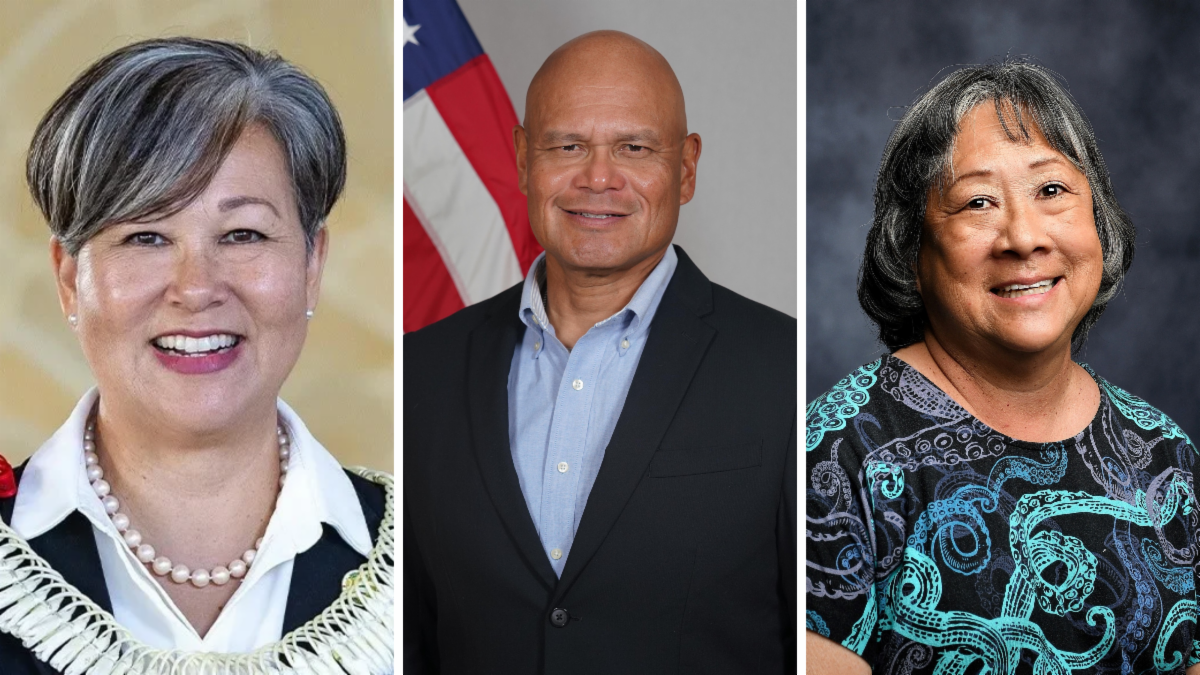
We are honored to introduce our featured speakers for the 2026 Veterans Day Sunset Ceremony.
Our Featured Speakers
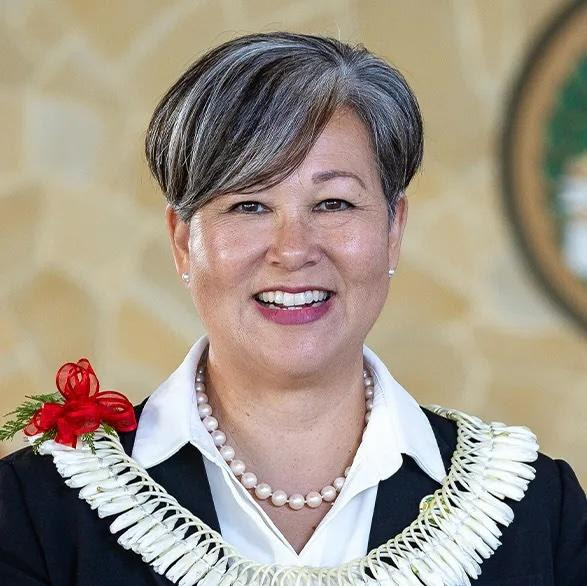
Major General Suzanne Puanani Vares-Lum (Ret.)
Director, Daniel K. Inouye Asia-Pacific Center for Security Studies
A Hawaiʻi native, Vares-Lum served 34 years in the U.S. Army, Army National Guard, and Army Reserve before retiring as a major general in 2021. Her distinguished military career included senior leadership roles at U.S. Indo-Pacific Command. During Operation Iraqi Freedom III, she was instrumental in establishing and leading the Joint Intelligence Center in Balad, Iraq. Today, she continues her commitment to service by advancing security cooperation and strengthening partnerships among the United States, its allies, and partners throughout the Indo-Pacific.
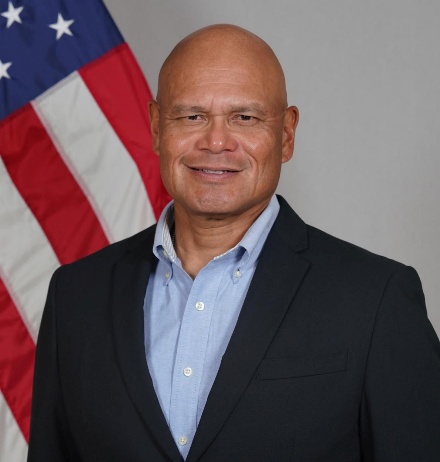
Lieutenant Colonel
John P. Alamodin
Director, State of Hawaiʻi Office of Veterans’ Services
Alamodin began his military career in the U.S. Army before transitioning to the Texas Army National Guard and later the Hawaiʻi Army National Guard. His service includes overseas deployments, disaster-response missions, and leadership in behavioral health. He currently serves as Chief Behavioral Health Officer for the Hawaiʻi Army National Guard. He also leads statewide programs supporting veterans, their families, and survivors, while serving as a liaison between veterans’ organizations and the U.S. Department of Veterans Affairs.
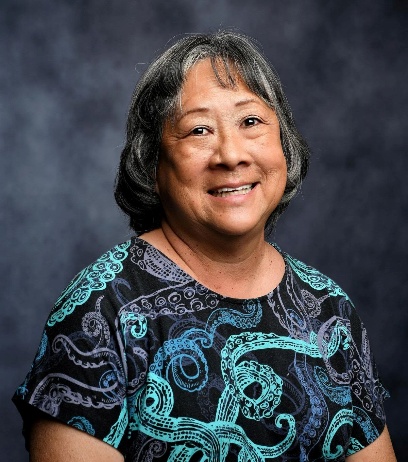
Rear Admiral
Alma Grocki (Ret.)
USS Missouri Memorial Association Board of Directors
A Honolulu native and the first woman from Hawaiʻi to enter the U.S. Naval Academy, Grocki graduated in 1981 and began her Navy career in warship and submarine maintenance. She became the first woman officer to accompany a submarine on post-availability sea trials. In 1988, she transitioned to the Navy Reserve, where she commanded nine ship maintenance units across the country, before being recalled to active duty serving in senior leadership roles. Grocki retired in 2016 after 35 years of naval service.
Join Us on November 11
Veterans Day Sunset Ceremony
Wednesday, November 11, 2026
4:30–5:30 p.m. HST
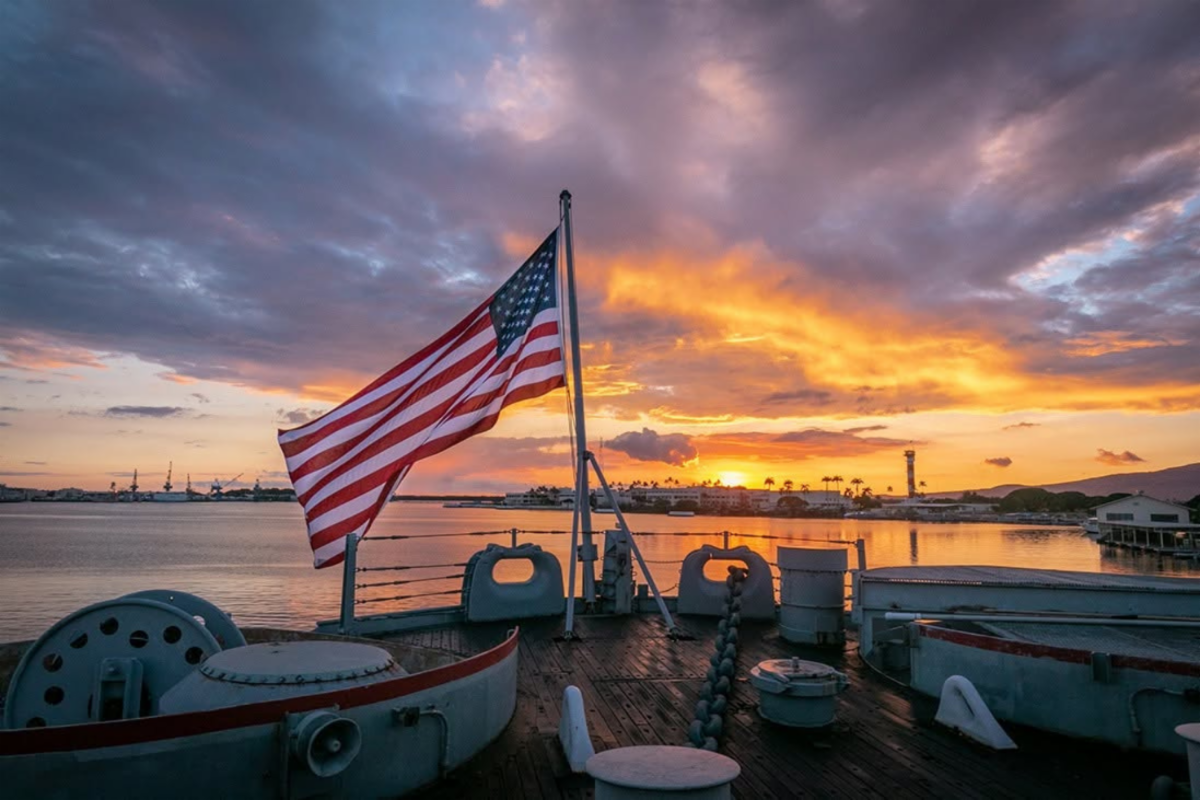
Battleship Missouri Memorial | Fantail
FREE and open to the public. No ticket required.
We invite our community to gather aboard the Mighty Mo for an evening of remembrance and gratitude as we honor the veterans who have served our nation across generations.
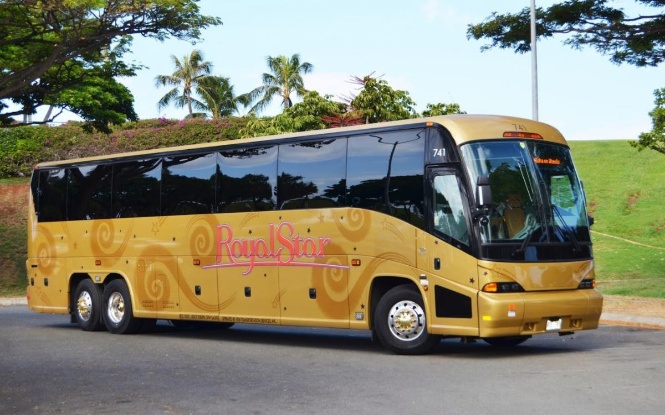
For guests without access to Ford Island, a complimentary shuttle service is available from the Pearl Harbor Visitor Center to the Battleship Missouri Memorial. Please arrive at the shuttle stop no later than 4:00pm HST. Please note that bags are not allowed on the shuttle.
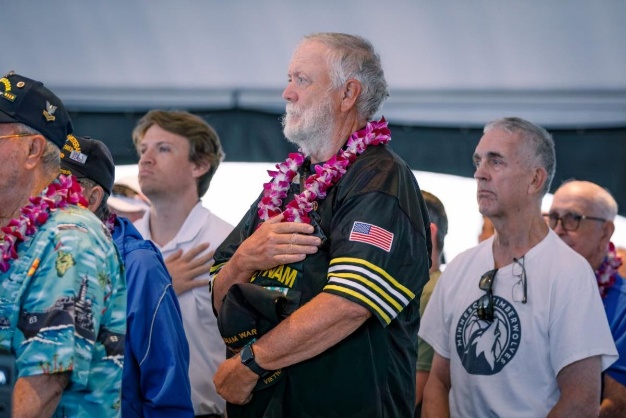
Watch Last Year’s Ceremony - Looking forward to this year’s Veterans Day Sunset Ceremony? Revisit last year’s commemoration aboard the Mighty Mo and experience the meaningful moments shared in honor of our nation’s veterans.
Battleship Missouri Memorial | 63 Cowpens Street |Honolulu, HI 96818 US

Sales & Marketing Executives — Rick Ralston Story Photos
Sales & Marketing Executives
Rick Ralston Story
Enjoy the photos!
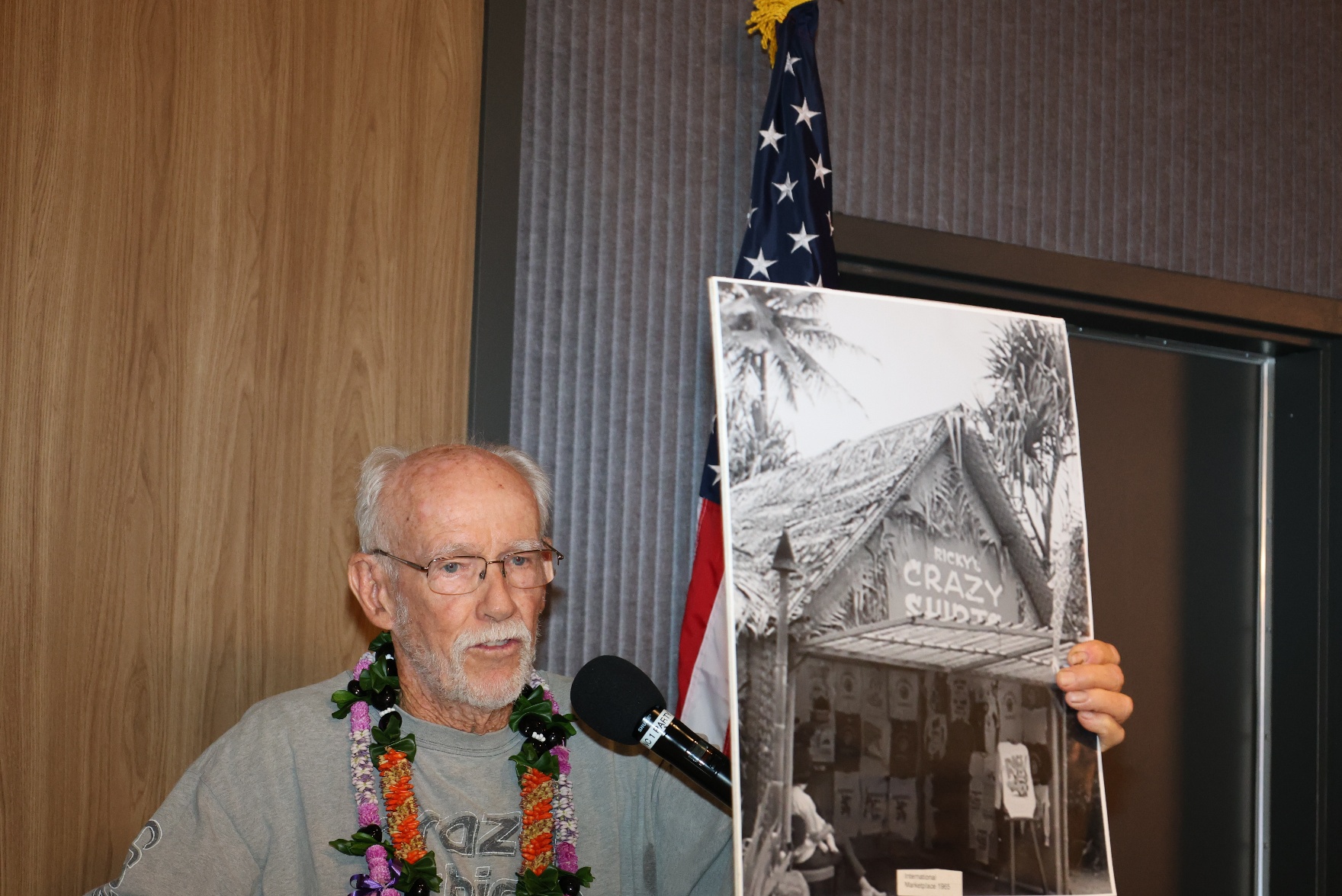
Thanks to Tony Grillo for his excellent Photography!
A Word from Our Sales Person of the Year — Sherry Menor on Question 2 (RISE Bonds)
A word from our Sales Person of the Year
Sherry Menor – Chamber of Commerce CEO
We need your support on Question 2 on the November 3, 2026 ballot. It's a constitutional amendment that would allow Hawaii's counties to use a new financing tool called Resilient Infrastructure for Shelter and Equity (RISE) Bonds.
Why it matters: Roads, water and wastewater systems, and other public infrastructure are essential to building new housing and supporting commercial activity. They're also expensive, and current county budgets and debt limits make it hard to finance the infrastructure new development needs. The Legislature put this question on the ballot because of that challenge.
How RISE works: Counties could finance public infrastructure within designated districts. Those improvements help spur new development and raise property values in the district, which generates additional property tax revenue to help pay for the improvements.
Connection to our 2030 Blueprint: The Chamber's 2030 Blueprint is our shared roadmap to improve Hawai's competitiveness, retain talent, and grow local opportunity. None of that works without housing that our workers and families can find and afford here, and housing doesn't get built without the infrastructure to support it. RISE gives our counties another practical tool to move that work forward.
So please vote YES on Question 2.
Mahalo,
Sherry Menor
The Solar Coaster Podcast — Efficiency vs. Climate with Anna Covert


When choosing solar panels, it's easy to focus on one number: efficiency.
But what happens when those panels are installed in the real world?
A solar project in the Swiss Alps faces snow loads, freezing temperatures and reflected sunlight. In the desert, extreme heat, dust and sandstorms create an entirely different set of challenges. And in tropical climates, humidity and moisture introduce their own concerns.
So, here's the question: Should we be designing solar systems around efficiency ratings, or around the environments where they'll actually operate?
In our latest episode of The Solar Coaster Podcast, Alex Herrera and I debate this very question.
We explore why the highest-rated module isn't necessarily the best choice for every project, how climate influences long-term durability and maintenance, and whether designing for local conditions should take priority over efficiency and cost.
We don't agree on everything, which makes this conversation particularly interesting!
Ultimately, it's about asking better questions before a solar project is designed, installed and expected to perform for decades.
Join us every Wednesday
#TheSolarCoaster Podcasts at 11am PST / 2pm EST
Learn About The Solar Coaster

Shop Official Merchandise
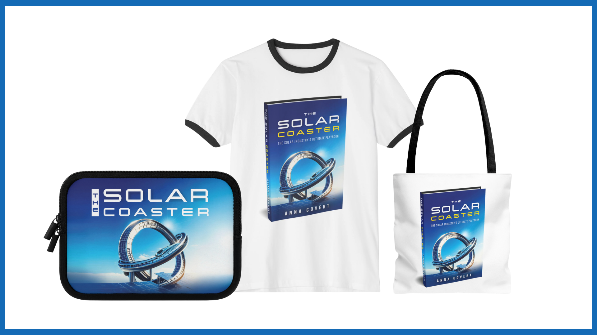

THE SOLAR COASTER
by Anna Covert
The Solar Industry's Ultimate Playbook
LIMITED Time Offer: GET THE BOOK FOR FREE!

Rotary Extravaganza — Message from President Fred Brooks
Rotary Extravaganza
Enjoy the photos
Message from President Fred!
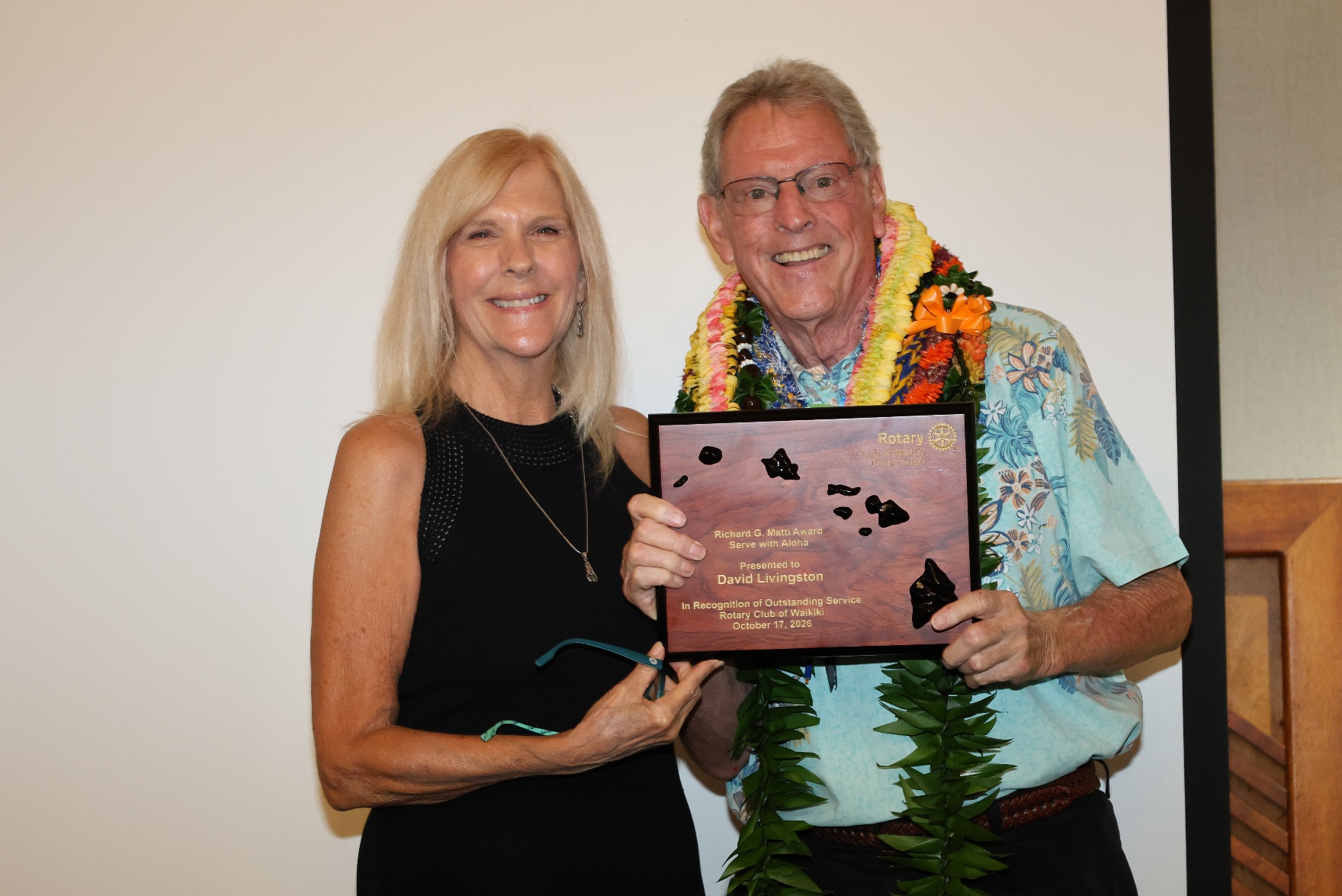
What a fantastic weekend! Our Waikiki Rotary Extravaganza last Saturday was a tremendous success, and it would not have been possible without the support, generosity, and hard work of so many members and friends. We also wish David Livingston a heartfelt Congratulations as the recipient of the Waikiki Rotary’s Richard G. Matti Service Award.
A heartfelt mahalo to everyone who attended, donated, volunteered, sponsored, and contributed in countless ways to make this event such a memorable celebration. Your commitment to Rotary and our community continues to inspire and strengthen our club.
I would like to thank many of our club members who were part of the extravaganza team, if I miss your name I greatly apologize.
President-Elect Claire Parcon for working with me from last November finding a venue and supporting on multiple roles.
Rafia Hasina for getting our entertainment, dancers, and the DJ, creating our program, and getting me my own translator for the welcome party.
The flower and decorating team- led by Aileen Fong, including Flora Lu, Judy Zhu, Tomoko Waddell, Emma Miyaki, and Nora Chen.
The donation of the lei from Flora Lu and Tom Matthews.
Yuka Kashiwabara for not only helping with all the Japan clubs but also getting the raffle to go.
The entire Team Japan for all the work including but not limited to:
Tomoko Waddell, Yuka Kashiwabara, Tomoko Malaghan, Atsuko Sekido, Ikko Tomita, Masayo Sasaki, Chad Adams.
Michael Galam- who is still waiting to get approved to be a member, who helped with registration and on teaching people how to use the app we used.
Janet Kelley and Carol Riley for being the presenters for the Richard Matti Award.
Dave Hamil, our treasurer for ensuring we were able to pay for the event.
Patti Look for working in several areas and providing continuous support.
Nathan Graves for support on the auction.
We would like to extend special recognition and gratitude to James Pierce, who wore several event hats throughout the planning and execution of the Extravaganza. James helped keep us moving forward and focused on success every step of the way. Mahalo, James, for your outstanding dedication and leadership! There were many 7 AM phone calls going over all the workings; I learned a great deal and am honored to have learned what it takes in getting sponsorships, auction items and donations, let alone having to set up the silent auction in a clean fashion and the fun part of storing the auction items!
Another big mahalo to James is for the Waikiki Rotary 20th Extravaganza Shirts he made and was generous enough to give so many away as gifts.
We also want to express our sincere appreciation to the more than 30 members of our Japan Sister Clubs who joined us throughout the weekend. Their presence at Friday's Welcome Party, the Extravaganza dinner, and the golf outing added a wonderful spirit of fellowship, friendship, and international Rotary connection. We are grateful for their support and delighted that they could celebrate with us.
The success of our Extravaganza reflects the strength of our Waikiki Rotary family and the power of many people working together toward a common purpose. A big Mahalo to all for helping create such a vibrant and successful event.
With gratitude and aloha,
Fred Brooks, President, 2026-27
Rotary Club of Waikiki
Fredrick G. Brooks, CEM, CEA, PVSI
General Manager
Pacific Panel Cleaners
License C-39009
Office: 808-772-4705
Speaker
Master Level Certified Thermographer Level III
NABCEP PV System Inspector Certified (PVSI)
Certified Energy Manager
Certified Energy Auditor
AEE Hawaii Scholarship Director
Waikiki Rotary Club President 2026-2027
Heat Spring Instructor- Thermal Scanning of PV Systems
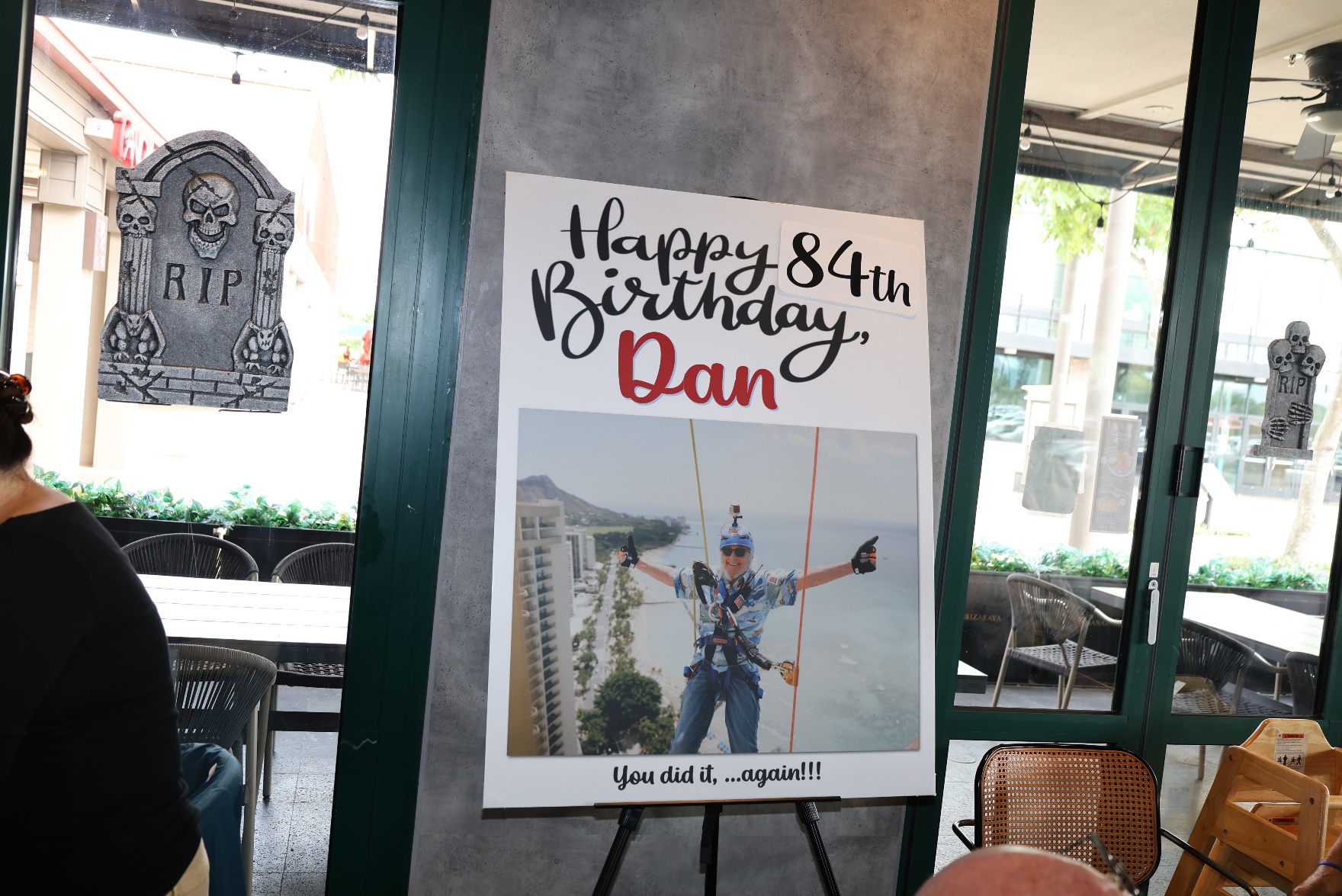
Special Olympics — Dan Delmonte, Oldest Participant & #2 Fundraiser
Special Olympics – Dan Delmonte
Oldest participant - #2 Fundraiser
Over the Top!
Enjoy the photos!
Seapower — November 2026 Digital Issue
November 2026
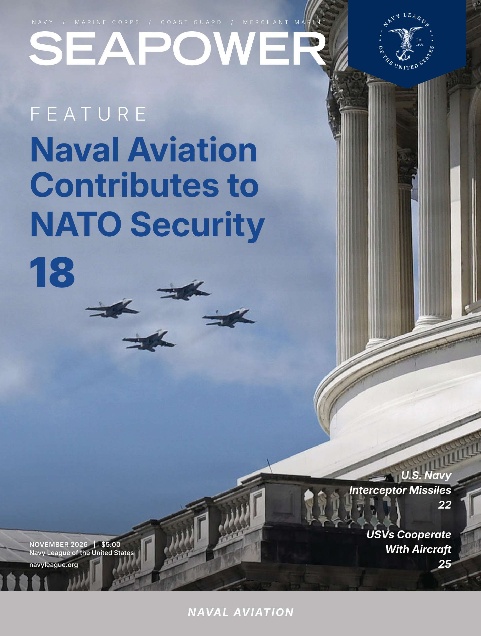
Hi David,
Your latest digital issue of Seapower is available now. Read it instantly on your phone, computer or tablet.
If you would like to view previous issues, please visit your library for access anytime.
Navy League Weekly Roundup — For Those Who Serve (October 16, 2026)

October 16, 2026
For Those Who Serve
Hello all, and happy Friday! If you're in a northern or high-elevation part of the country, we hope you get a chance to appreciate the changing leaf colors this weekend. The window to appreciate fall foliage always closes faster than we think! There are a few major foreign policy developments from this week to cover, so let's get into them.
Ukrainian forces resumed drone strikes on Russian oil refineries on Thursday, ending a ceasefire on energy infrastructure attacks President Trump previously announced. Ukrainian President Volodymyr Zelenskyy indicated that the resumption of attacks was partially motivated by frustration over President Trump and Russian President Putin's deal to import 2.2 million tons of Russian diesel into the U.S. market. The deal reversed the United States' long-standing position of sanctioning Russian oil in response to Putin's violations of Ukrainian sovereignty. In a joint statement, a bipartisan group of senators said that they were not warned or consulted about the deal and that it violates a 2022 statute banning the import of Russian oil, diesel, and natural gas.
The Iranian-backed Yemeni rebel group, the Houthis, struck the presidential palace in Aden, the seat of Yemen's official government yesterday. The missile strike reportedly killed five people and injured 16; government officials confirmed that the prime minister was unharmed in the attack. The Houthis announced that the attack was directed at Saudi Arabian forces in Aden supporting the official government. For weeks, Saudi and Houthi forces have exchanged strikes as they battle to seize control of Yemen. According to the official government of Yemen, over 1,280 people have been killed and 5,900 injured since the conflict escalated in early August.
On Wednesday, Ukrainian authorities reported that they had lost access to the Starlink military system Starshield, a satellite communications system that supports remote connectivity for capabilities such as air defense systems. The Hill reported that Starlink connectivity had been cut off for objects travelling more than 100 miles per hour, such as drones and planes. The interruption to Ukraine's wireless connection on the battlefield prompted inquiries into a potential cause, which has not yet been publicly identified. Elon Musk, the CEO of Starlink parent company SpaceX, said that the technology in question is owned and controlled by the U.S. government and the military and President Trump are responsible for decisions about its usage. Ukraine's former Minister of Defense said that SpaceX was restoring connectivity speeds on social media on Wednesday.
Months of peaceful anti-corruption protests in Albania turned hostile this week. The demonstrations began in the summer, following the announcement of a luxury resort development on the Adriatic island Sazan. Protestors said that the construction project would ruin the protected nature preserve on the island, potentially interfering with the local population of flamingos, after which the movement is named. With earlier marches in the country's capital yielding no results, impassioned youth protestors have led the next phase of the movement. The youth demonstrations are calling for both the Albanian prime minister and opposition leader to resign, with their demands centered on the high cost of living and education, as well as political corruption. Some Albanian leaders are concerned that this wave of unrest will affect the country's ambitions of joining the European Union.
If you would like to unsubscribe, please use the link at the bottom of the newsletter.
Tell Your Senator: Cosponsor the SHIPS for America Act
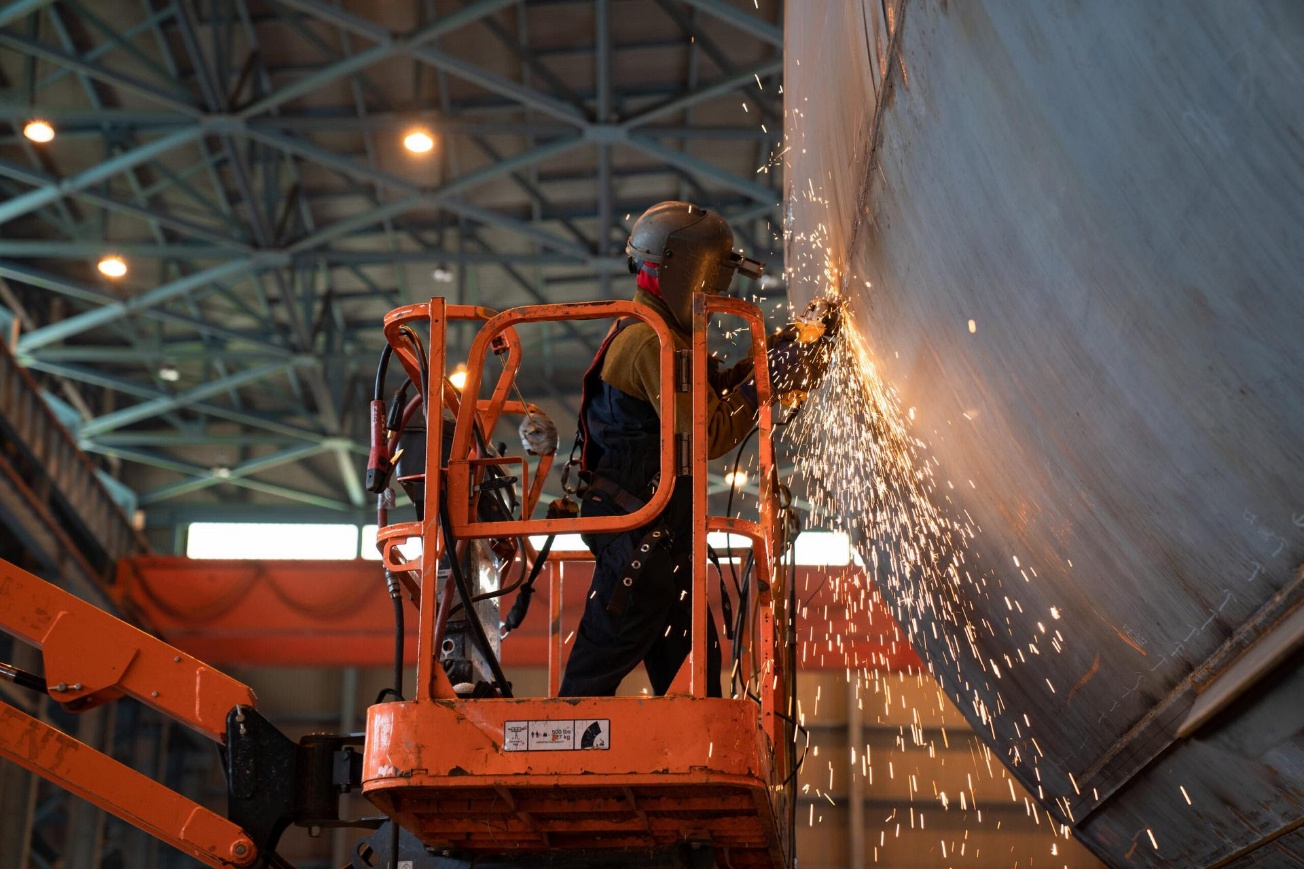
join the campaign here
A strong U.S. shipbuilding industry is essential to our national security. To strengthen America's shipbuilding capacity, Congress must take action.
The SHIPS for America Act is a comprehensive plan to revitalize U.S. shipbuilding and maritime competitiveness. Since its introduction, the legislation has earned broad bipartisan support, with 142 House cosponsors and 28 Senate cosponsors. However, it has not yet been enacted into law.
Earlier this year, Representative Trent Kelly successfully secured an amendment to include the SHIPS Act in the House version of the National Defense Authorization Act (NDAA), which passed in July. Unfortunately, the Senate version of the NDAA does not include this provision.
As House and Senate negotiators work to finalize the NDAA, now is the time to show strong support for the SHIPS Act.
Don’t forget to share your council's stories with us!
If you have council or regional news to share, please send an email with your pictures and a description of your activities to stoloczko@navyleague.org so we can include them in this newsletter.
Great Power Competition
A string of drone attacks on at least seven cargo vessels in the Black Sea this month, off the coasts of NATO members Romania and Bulgaria, has some members of the alliance wondering if Russian President Vladimir Putin is seeking escalation to test their support for Ukraine in its war against Moscow’s full-scale invasion.
Navy
Navy civilianizes six former flag Billets, reduces six to captains - USNI news/Oct 15
The Navy quietly changed six billets held by flag officers to civilian posts as the service looks to follow Defense Secretary Pete Hegseth’s call for “less generals, more GIs.”
Pentagon
Execution of Nidal Hasan will not be livestreamed, Trump says - Reuters/Oct 15
U.S. President Donald Trump said on Thursday that the execution of Nidal Malik Hasan would not be livestreamed but that immediate families of the victims would be able to view it in person.
Industrial Base
Lockheed invests $300M in Texas plant to feed missile surge - Defense News/Oct 15
Lockheed Martin is investing $300 million to expand its plant in Grand Prairie, Texas, which supports all programs across its Missiles and Fire Control business, including the PAC-3 MSE and THAAD interceptors, the Precision Strike Missile and the AIM-260 Joint Advanced Tactical Missile.
Navy League of the United States
2300 Wilson Blvd, Suite 200
Arlington, VA 22201
703-312-1571
Their Courage Lives On: Remembering Three Doolittle Raiders
Their Courage Lives On
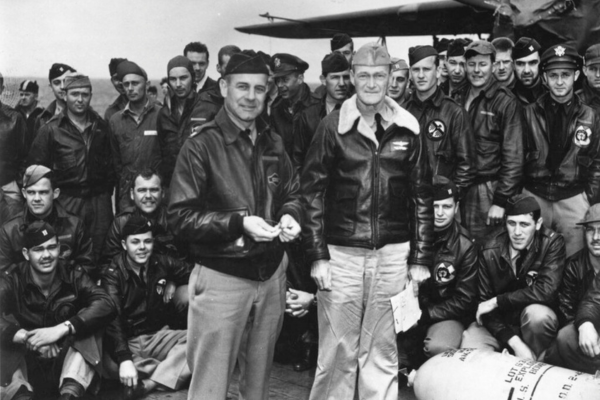
Their Courage Lives On:
Remembering Three Doolittle Raiders
Today marks a solemn anniversary in the story of the Doolittle Raiders and the sacrifices made during World War II. To honor the memory of First Lieutenant Dean Hallmark, First Lieutenant William Farrow, and Sergeant Harold Spatz, Pearl Harbor Aviation Museum is sharing a reflection written by one of the Museum’s longtime supporters and dedicated advocates. Janice Neilson, a generous Museum friend and donor, champion of our mission, and this year’s Presenting Sponsor for the For Love of Country Gala, has helped ensure that the stories of our nation’s heroes continue to be preserved and shared for future generations.
On October 15, 1942, three of Jimmy Doolittle Raiders lost their lives at the hands of Japanese firing squad. They had been convicted in a Japanese Court of being war criminals and sentenced to execution.
In separate cells sat First Lieutenant Dean Hallmark (Pilot, plane #6), First Lieutenant William Farrow (Pilot, plane #16), and Sergeant Harold Spatz (Engineer – Gunner, Plane #16). They were Raiders—men who had volunteered for the impossible mission without hesitation.
Six months earlier (April18th), they had taken off from the pitching flight deck of the USS Hornet on a mission that felt impossible: the Doolittle Raid. They had bombed the heart of Japan, a daring strike that stunned the world, boosted American morale, and became one of the defining moments of the Pacific War. But fate had turned cruel when their aircraft went down, landing them in enemy hands.
They were young men—far from their homes in Texas, Pennsylvania, and Kansas, in the quiet hours before dawn, sleep offered little refuge. Instead, they must have thought across thousands of miles of ocean.
One can imagine Dean Hallmark reflecting on his Texas home, the blue skies and warmth, and the brothers-in-arms he had left behind in the squadron. He wondered if the world knew what had become of them, or if their sacrifice would echo long after they were gone.
William Farrow known for his strong faith, may have found strength in his beliefs and the quiet resolve that had carried him through the training fields of Florida and the terrifying flak over Tokyo. He prayed for strength, not just for himself, but for the families waiting anxiously half a world away.
At just 21, Harold Spatz, likely felt his youth was being cut short. As a gunner and engineer, he had trusted his crew implicitly. In the quiet dark, he found solace in the brotherhood forged over roaring engines and shared danger.
On October 15, 1942 there were no grand speeches, no theatrical displays of fear or defiance. Instead, the three men met their fate with a quiet, unyielding dignity that even their captors could not ignore. As they were led out into the courtyard under the cold autumn, they stood tall, carrying themselves not as defeated prisoners, but as proud American servicemen who had answered their country's call.
At 4:30 PM that afternoon, their lives were cut short by Japanese firing squad execution in the public cemetery of Shanghai.
They did not live to see the end of the war, nor the ultimate victory of the cause they fought for. But their courage in those final moments ensured they would never be forgotten. Today, Hallmark, Farrow, and Spatz rest in honor, their names forever etched into the legacy of the Doolittle Raiders—a testament to bravery, sacrifice, and the enduring cost of freedom.
Sgt Harold A Spatz is buried at Punchbowl Cemetery (National Cemetery of the Pacific in Hawaii) in grave Q297. Next time you are there, visit Harold, pay your respects and let him know he is not forgotten.
More than 80 years later, the legacy of the Doolittle Raiders continues to inspire visitors, students, and future generations who walk through Pearl Harbor Aviation Museum. Their stories remind us that history is not just about events, but about the individuals who faced extraordinary circumstances with courage and conviction.
We are grateful to Janice for sharing this tribute and helping ensure that the sacrifice of Hallmark, Farrow, and Spatz is never forgotten.

Pearl Harbor Aviation Museum
Historic Ford Island
319 Lexington Boulevard
Honolulu, HI 96818
808-441-1000
Pearl Harbor Aviation Museum is a 501(c)(3) non-profit organization which is dependent on its members, volunteers and donors. Thank you for your support.
The Covert Code — How Big Tech Stole Your Identity, with Raj Ananthanpillai

How Big Tech Stole Your Identity—and the New Model That Takes It Back
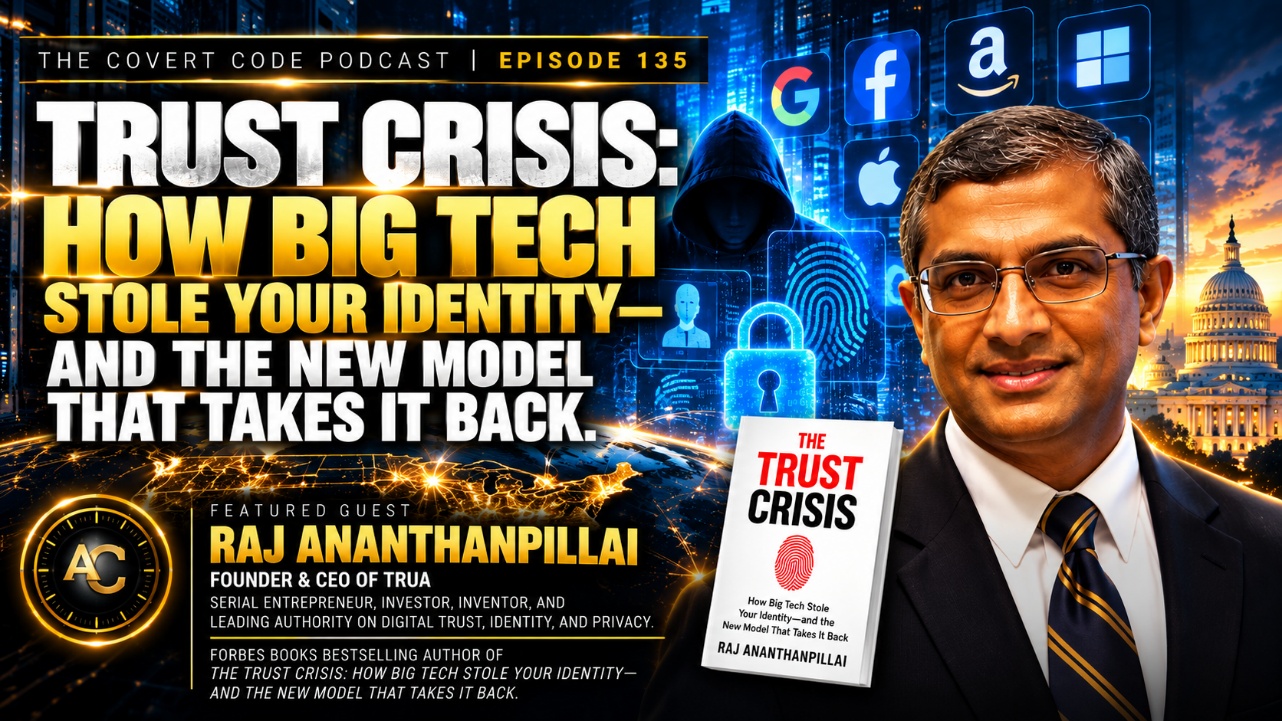
How many companies have copies of your driver's license, Social Security number, date of birth, or other sensitive information?
Now think about how many of those companies you actually trust to protect it.
This week on The Covert Code, I'm joined by Raj Ananthanpillai, Founder and CEO of Trua and author of the Forbes Books bestseller The Trust Crisis: How Big Tech Stole Your Identity—and the New Model That Takes It Back.
You know digital privacy and security are two of my greatest passions, so this conversation was right up my alley!
Raj and I explore how we ended up giving away so much of our personal information, why the systems designed to verify our identities are fundamentally flawed, and how artificial intelligence is making the problem even more urgent.
But here's what I found most fascinating: Raj is proposing an entirely different model.
Imagine verifying your identity once and sharing only the proof a business needs—without repeatedly surrendering your most sensitive information.
We also discuss AI agents, protecting children online, the limitations of traditional identity protection, and what it will take to give consumers more control.
And there's another reason to support Raj's work: he's directing book proceeds toward helping victims of identity theft and supporting education.
Join us on Aloha Friday for
#TheCovertCode Podcasts at 11am PST / 2pm EST
Last Week's Episode

Shop Merchandise

NEW For Subscribers


THE COVERT CODE
by Anna Covert
Mastering the Art of Digital Marketing
Available to Purchase NOW.
What a Beautiful Song! — HVN & ERTH “ALL IN ALL”
What a beautiful Song!
Hi David,
It was so nice seeing you at the event at Sheraton the other night. I know I told you I’d send you info about my daughter’s new music! She is part of a Christian band called HVN & ERTH and they just released a new song last night called “ALL IN ALL” that features my daughter Celine :) on all music platforms Spotify, Apple Music, YouTube, etc etc. if you put it on you playlist, stream, & share it helps their group a lot. Hope you enjoy it!
Thanks Dave for all your support
Over the years and always checking in on her!
Thank you so so much,
Kathy & Stanford Carr
Peter Savio Releases Third Book on Hawaiʻi’s Affordable Housing Crisis

Peter Savio Releases Third Book on Hawaiʻi’s Affordable Housing Crisis
New book presents proposed solutions and challenges conventional thinking about homeownership and renting
HONOLULU, Hawaiʻi (October 2, 2026) – Hawaiʻi affordable housing developer Peter Savio has released his third book, Hawaiʻi’s Housing Affordability Solution: “Duck Soup” The Problem? A Tree Blocking the Canal Representing the Failure of Government. The book explores Hawaiʻi’s affordable housing challenges, examines existing housing programs, and presents potential solutions to expand homeownership.
Through the book, Savio urges government leaders, business leaders, labor unions, and residents to shift their mindset from “no can do” to “we can do.” The title’s use of “duck soup,” a pidgin English expression for something easily accomplished, reflects his belief that affordable housing is possible in Hawaiʻi with the right approach.
Following his first two books, Hawaiʻi’s Housing Solution: “Move to the Mainland”; 60 Years of Failure, It Must End and How Real Estate Can Build Generational Wealth, Savio continues to address the urgency of protecting Hawaiʻi’s people, culture, and Native Hawaiian and host communities.
“70% of Hawaiʻi renters plan to leave within five years due to the high costs of living and housing. Even doctors, lawyers, accountants, and skilled union workers are leaving. If these high-paying professionals can’t afford to stay, imagine the challenges faced by average workers,” Savio writes.
In his latest book, Savio outlines several proposed solutions that focus on leveraging existing federal and state programs, expanding homeownership, and addressing the underlying factors contributing to Hawaiʻi’s housing crisis. Key topics include:
· Expanding homeownership to stimulate economic growth: Savio points to Singapore’s affordable homeownership model, which reduced the influence of wealthy investors and landlords by increasing owner-occupancy. He argues that the model was inspired by guidance Hawaiʻi provided to Singapore in the 1960s.
· Examining the housing crisis and the real estate market: Savio argues that understanding how the real estate market works is essential to finding solutions. He breaks down complex housing issues and examines how welcoming an influx of mainland buyers can affect Hawaiʻi’s housing market.
· Making homeownership more accessible: Building on the ideas in his second book, How Real Estate Can Build Generational Wealth, Savio encourages readers to understand the tools and wealth-building opportunities available through real estate. He also outlines different benefits and approaches that may help people afford a home.
· Establishing a foundation for affordable housing: Savio proposes changes to the existing housing framework and calls for leaders, stakeholders, and experts in real estate, finance, and law to develop legal frameworks and programs tailored to Hawaiʻi’s specific housing challenges.
· Taking bolder steps to improve affordability: Savio calls for streamlining government processes, addressing inefficiencies, and exploring ways to convert existing rental properties into affordable, owner-occupied units to expand homeownership opportunities for Hawaiʻi residents.
“Affordable housing is possible in Hawaiʻi. I know because I’ve done it—developing 6,000 affordable units with minimal government assistance,” Savio shares. “My model, inspired by Hawaiʻi’s original advice to Singapore, included no-money-down programs, interest-free loans for down payments, and flexible rent-to-own options.”
Savio’s goal is to encourage the implementation of both proposed and existing programs that could help more people in Hawaiʻi purchase a home. He emphasizes that achieving this vision requires a shift in mindset and a willingness to work together.
“This vision requires courage: from leaders to shed the status quo, from developers to embrace low-risk collaboration, and from all of us to honor our past by finishing what we started,” Savio writes.
Hawaiʻi’s Housing Affordability Solution is now available on Amazon. To learn more, visit PeterSavio.com or purchase the book on Amazon.
# # #
Peter B. Savio is President and Chief Executive Officer of the Savio Group of Companies. Born in Hilo and raised on Oʻahu, Savio has more than 60 years of experience in real estate development and sales in Hawaiʻi. Since founding Savio Realty Ltd. in 1980, he has helped clients maximize returns on their real estate investments, with much of his career focused on affordable housing and agricultural projects in the state.
To date, Savio has converted more than 24,000 units to fee-simple ownership, making the Savio Group the largest active lease-to-fee converter in Hawaiʻi. At just 15 years old, Savio bought his first property, a Waikīkī apartment, using money from his paper route for the down payment.
HKBAH SIG Expo & Networking Night 2026
📅 Date: Wednesday, October 28, 2026 | 5:30 PM – 8:00 PM HST
📍 Location: Central Union Church – Parish Hall, 1660 S. Beretania St., Honolulu, Hawaiʻi 96826 (free onsite parking)
🎟 Tickets / Info: $35 HKBAH members / $40 non-members / $35 per person group rate (3+) / reserved table of 8 — hkbah.us/tickets
HKBAH SIG Expo & Networking Night 2026

Wed 28 Oct 2026 • 5:30 PM – 8:00 PM
Central Union Church – Parish Hall 1660 S. Beretania St., Honolulu, Hawaiʻi 96826 (Free onsite parking)
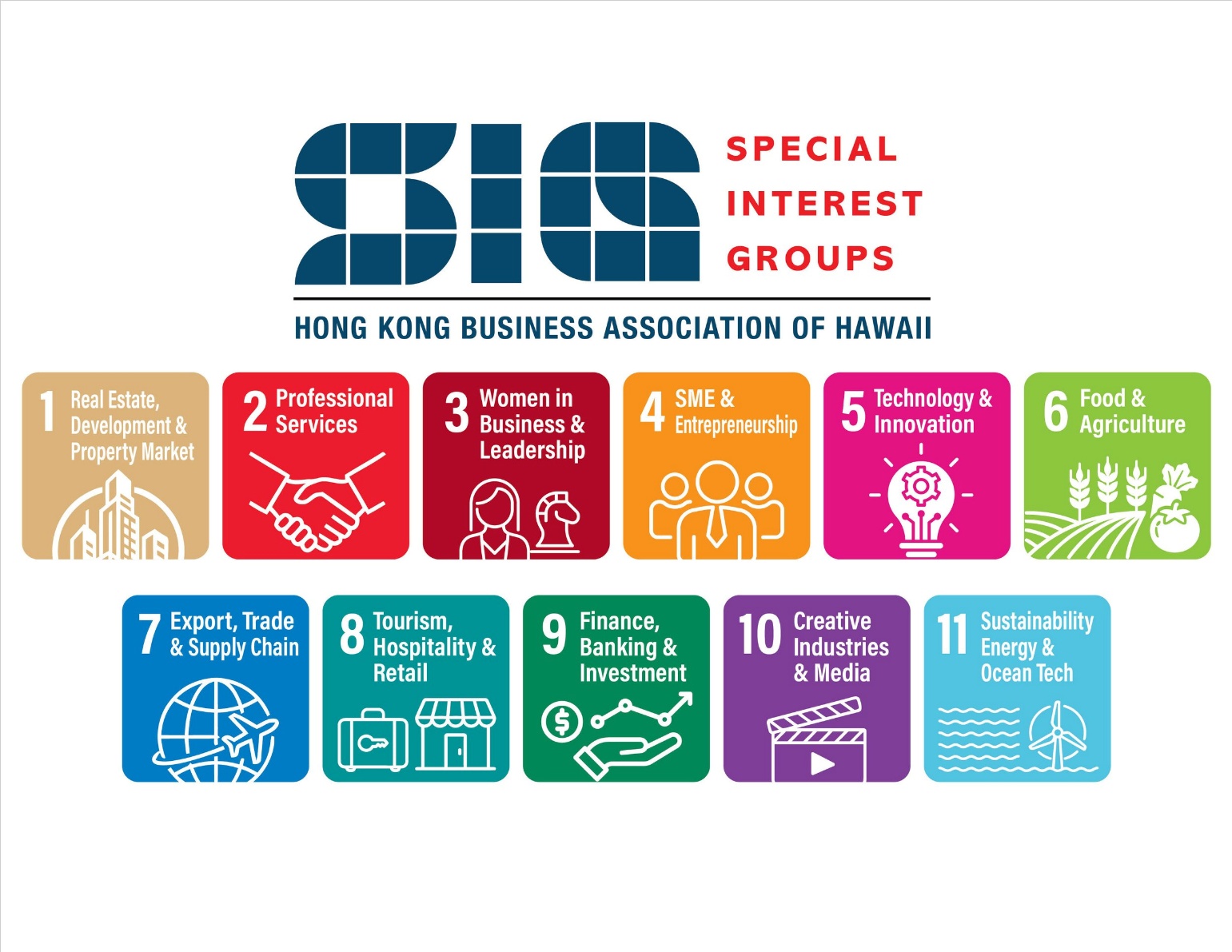
Join us for the HKBAH SIG Expo, a dynamic cross-sector networking night featuring Hawai‘i’s 11 Special Interest Groups (SIGs). This event brings together professionals, entrepreneurs, and community leaders who are shaping Hawai‘i’s future through meaningful connections with Hong Kong and the Greater Bay Area. Enjoy great food, unlimited drinks, and a lively room filled with opportunities.
What to Expect When You Walk In
When you enter the Expo hall, you’ll be greeted by:
• A warm welcome from HKBAH SIG Ambassadors and their team
• A vibrant room with 11 SIG tables, each representing a Hawai‘i–HK–GBA industry community
• A friendly, open environment designed for easy conversation and discovery
By the end of the night, you will:
Meet new contacts, discover cross-border opportunities, learn how Hawai‘i industries connect with Hong Kong and the GBA, build relationships that support your business or career, enjoy a fun, memorable evening with Hawai‘i’s business community.
Featured Activities
SIG Passport “Fact Hunt” Game
A fun, interactive way to explore the Expo.
How it works:
• Receive a SIG Passport at check-in
• Visit SIG tables and collect unique Hawai‘i–HK–GBA facts
• Complete your passport to enter the prize drawing
Prize Drawings
Photo Moments
Cross-Pacific Networking
Featured Menu (Included with Your Ticket)
• Heavy pūpū + desserts
• 2-hour open bar (beer & wine)
A HK style meal + unlimited drinks + networking — an incredible value at $35–$40.
Why HKBAH Launched the SIG Initiative
HKBAH created the SIG Initiative to strengthen Hawai‘i’s connections with Hong Kong and the Greater Bay Area by organizing our community into clear industry sectors. SIGs provide a platform for professionals to learn, collaborate, and discover cross-border opportunities. Through SIGs, HKBAH supports Hawai‘i businesses with relevant insights, meaningful relationships, and a structure that prepares our community for long-term Hawai‘i–HK–GBA engagement.
Ticket Pricing
• HKBAH Members: $35
• Non-Members: $40
• Group Rate (3+): $35 per person
• Reserved Table (8 seats): Available
Explore the SIG sectors
Real Estate • Professional Services • Women in Business • SMEs • Technology •

I Wrote a Check – I Hope You Will Too! The Texas Safe Harbor Invitational
📅 Date: June 3–4, 2027 (two-day event)
📍 Location: Hyatt Regency Hill Country Resort, San Antonio, Texas
🎟 Tickets / Info: Online contributions: birdease.com/36877
I wrote a Check – I hope you will too!
Online contributions to
Navy Safe Harbor Foundation
October 6, 2026
David Livingston
Ameriprise Financial
Aloha my friend,
I wanted to reach out to you personally about something that is very important to me.
As you know, I spent almost 30 years in the United States Navy and had the privilege of serving alongside some incredible Sailors and families. Today, I have the opportunity to continue that service as a member of the Board of Directors of the Navy Safe Harbor Foundation.
On June 3–4, 2027, we are bringing The Texas Safe Harbor Invitational to San Antonio at the Hyatt Regency Hill Country Resort. This is more than a golf tournament. It is a two-day event built around one simple promise:
NEVER TO SAIL ALONE.
The Navy Safe Harbor Foundation provides support to seriously wounded, ill and injured Sailors and Coast Guard members and, just as importantly, to the families and caregivers standing beside them. When someone who has served is facing one of the hardest periods of their life, Safe Harbor helps make sure they don't have to face it alone.
We have already secured USAA as our $25,000 Presenting Sponsor, and we are now reaching out to a select group of individuals and companies who may want to help us take this mission even further.
David, I'm asking if you would consider making a donation to support the Texas Safe Harbor Invitational and the Navy Safe Harbor Foundation.
The contribution can be at whatever level makes sense for you. It can be a financial contribution, an item or experience for our auction, or another form of support that you believe would make a difference. Every contribution goes toward helping us raise the resources necessary to support Sailors, Coast Guardsmen and their families when they need it most.
I don't want this to simply be another request for money.
I would like you to understand what we are trying to accomplish and, if it resonates with you, give you an opportunity to be part of it.
We are bringing together business leaders, veterans, military families, community leaders and supporters from across Texas for two days centered on service, sacrifice and taking care of our own.
If you are willing, I would appreciate the opportunity to sit down with you for a few minutes and talk about the event and how you or Ameriprise might want to support the mission.
Thank you for considering it, David. Regardless of the level of support, I appreciate you taking the time to hear what we are trying to do.
When someone who served needs help, we should stand beside them.
Never to Sail Alone.
Respectfully,
John Minyard
Tournament Chairman
The Texas Safe Harbor Invitational
Board of Directors
Navy Safe Harbor Foundation
Fleet Master Chief, U.S. Navy (Ret.)
Connections with Our Sea Services — Navy League, October 2026

OCTOBER 13, 2026 | MEMBER LOGIN | VISIT WEBSITE
Welcome to the October 2026 edition of Connections with Our Sea Services, your members-only Navy League newsletter.
In This Month's Edition:
A Navy Birthday Message from CEO Mike Stevens
Celebrating the U.S. Navy’s 251st Birthday in Washington
Around the League: Kansas City Namesake Visits
Navy League Foundation Scholarships
Take Action: Support the SHIPS for America Act
Read the October Issue of Seapower Magazine
Let’s get underway
FROM THE CEO
Happy 251st Birthday, United States Navy!
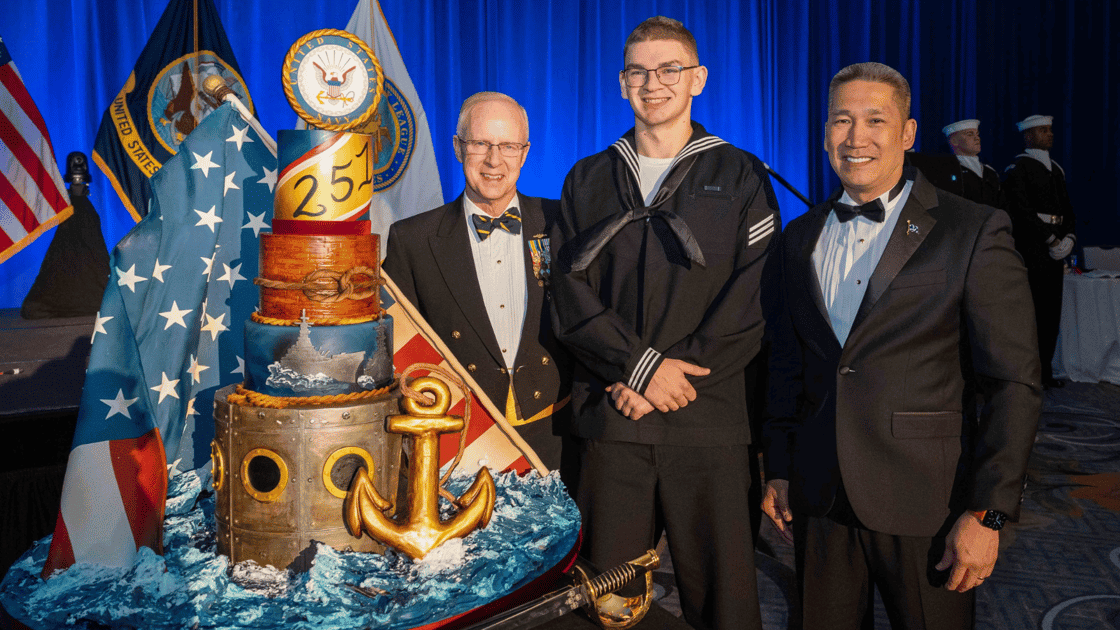
For 251 years, the United States Navy has stood as a symbol of strength, courage, and unwavering commitment to our nation's freedom and security. From the earliest days of our Republic to today's complex global security environment, generations of Sailors have answered the call to serve, defend our interests, protect the seas, and preserve peace.
On behalf of the Navy League of the United States, we extend our deepest gratitude to every Sailor, past and present, whose dedication, sacrifice, and professionalism have built and sustained the world's finest Navy. We also recognize the families whose steadfast support makes that service possible.
As we celebrate this historic milestone, the Navy League remains steadfast in our mission to support our sea service members and their families, advocate for strong sea services, and educate the American public and Congress on the importance of sea power to our nation's security and prosperity.
Happy Birthday, Shipmates!
Mike D. Stevens
Chief Executive Officer
Navy League of the United States
NAVY BIRTHDAY BALL
Navy League Celebrates the Navy's Birthday in Washington
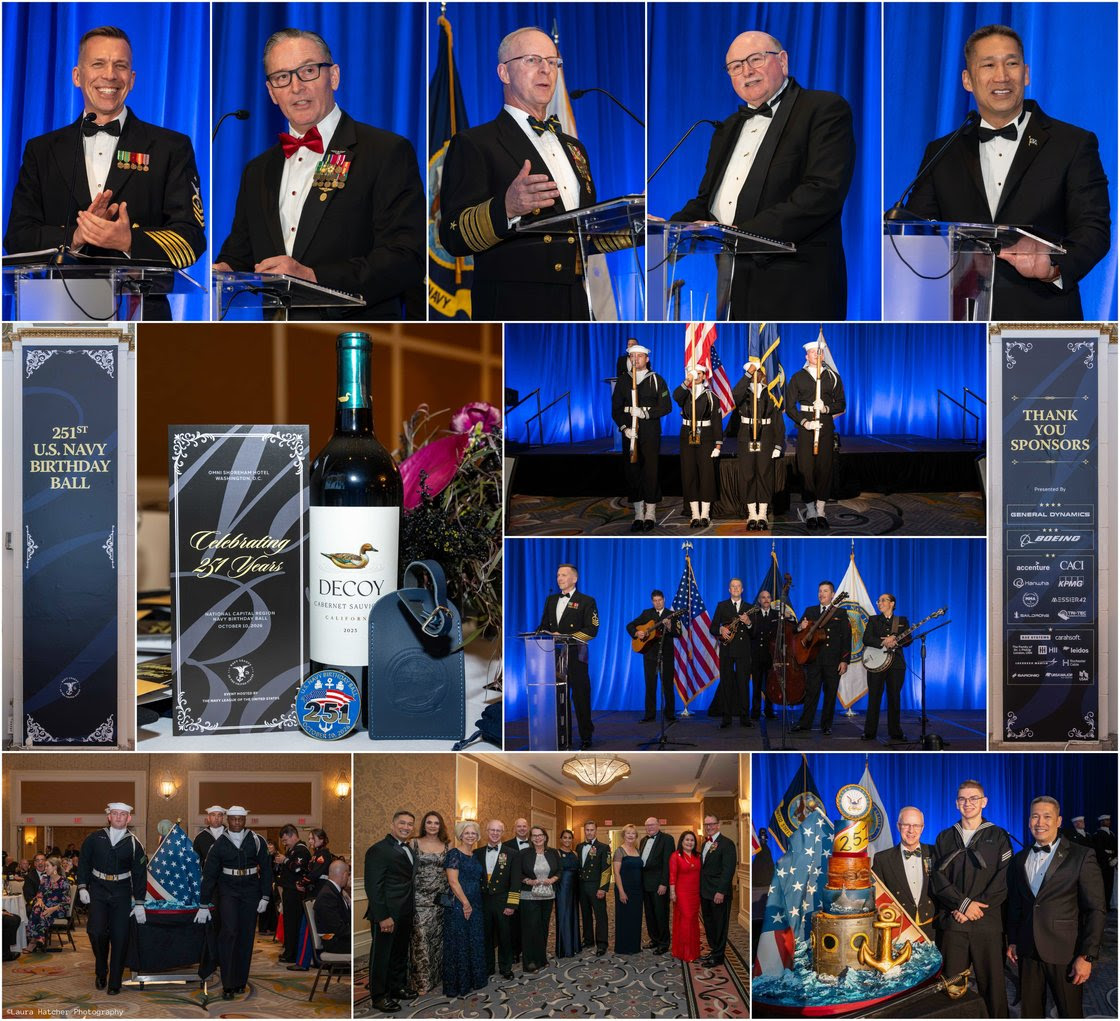
On Oct. 10, the Navy League of the United States hosted the National Capital Region U.S. Navy Birthday Ball in Washington, D.C., bringing together Sailors, Navy leaders, Navy League members and supporters to celebrate 251 years of service and tradition.
The evening featured remarks from Navy League leadership, Chief of Naval Operations Adm. Daryl Caudle and Acting Secretary of the Navy Hung Cao, along with time-honored Navy birthday traditions.
The Navy League also presented the Adm. Vern Clark, USN, and Gen. James Jones, USMC, Safety Awards to CDR Stockdill, USN; CAPT Thomas Dill and David Rich, NAVFAC; and SgtMaj Daniel Gonzalez and LtCol Chad Kelling of Marine Medium Tiltrotor Squadron 16.
Happy 251st Birthday, U.S. Navy!
AROUND THE LEAGUE
Namesake Visits Bring Two Navy Crews to Kansas City
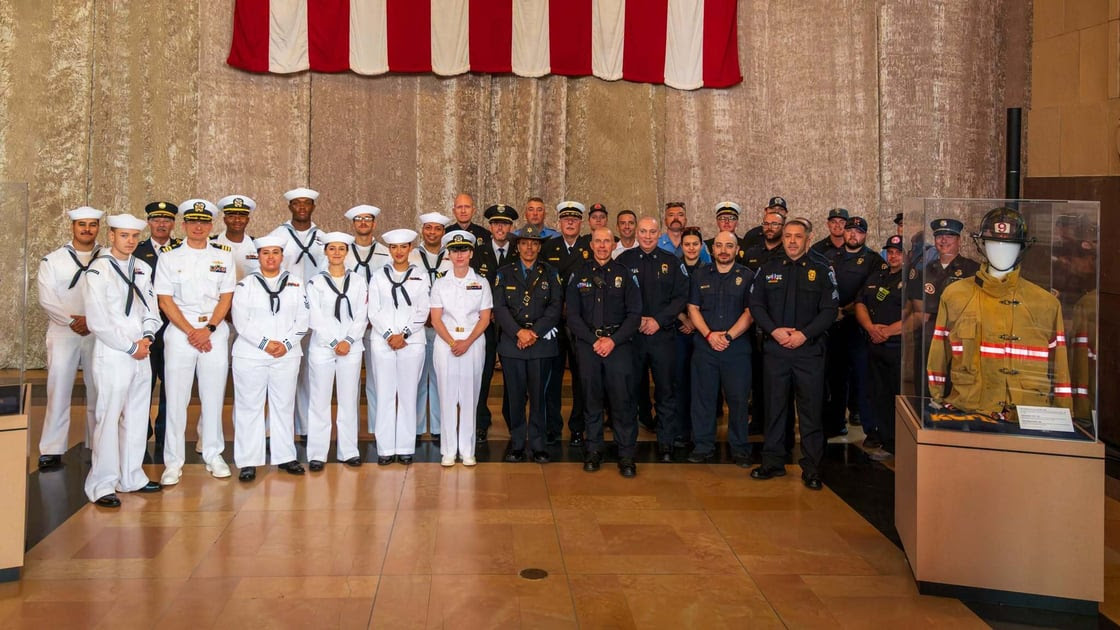
The Navy League of Greater Kansas City welcomed Sailors from USS Kansas City and USS Harry S. Truman for two namesake visits in September. Across the two visits, Sailors connected with students, veterans and community organizations, took part in service projects and explored the history and people behind the names their ships carry.
→ Explore More from Around the League
NAVY LEAGUE FOUNDATION
Scholarship Applications Open Oct. 15
The Navy League Foundation’s 2027 scholarship application period opens this Thursday, October 15. Eligible applicants will have the opportunity to apply for scholarships supporting their education for the upcoming academic year.
Watch your inbox later this week for full details, eligibility information and deadlines.
VOICE TO CONGRESS
Urge Your Senators to Cosponsor the SHIPS for America Act
As Congress continues work on the FY2027 National Defense Authorization Act, the Navy League is advocating for SHIPS for America Act provisions to be included in the final bill. The House-passed FY27 NDAA includes SHIPS for America Act provisions, while the Senate has not yet passed its FY27 NDAA.
The Navy League is asking members and supporters to contact their U.S. senators and ask them to cosponsor S.1541, the SHIPS for America Act. Through our Voice to Congress campaign, you can send a prewritten message directly to your senators.
UNDERSEA WARFARE
Read the October Issue of Seapower Magazine
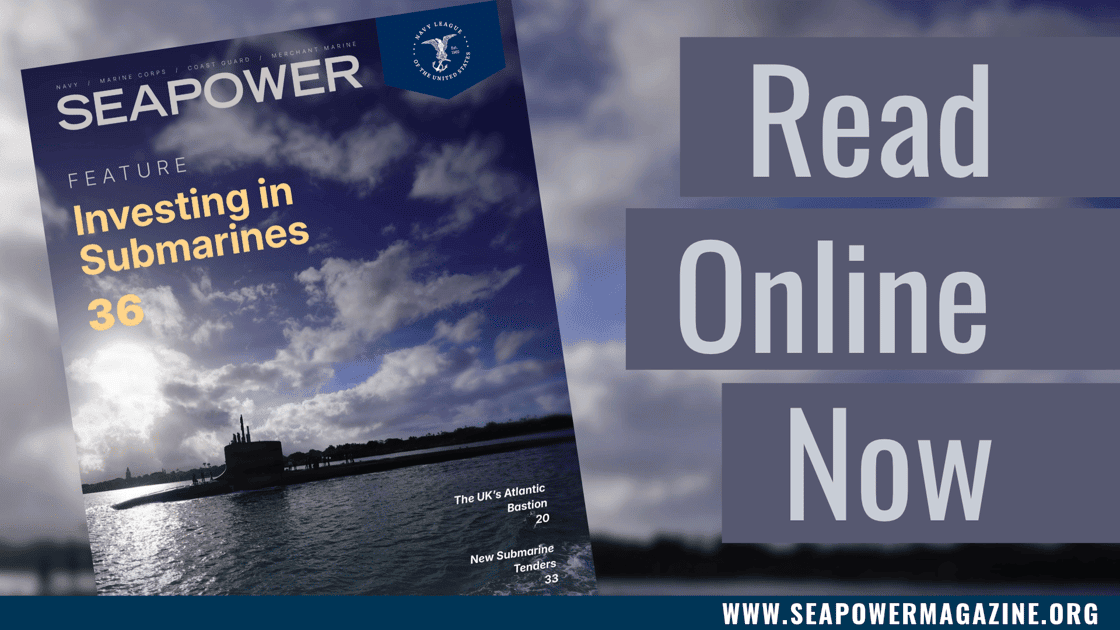
The October issue of Seapower takes a deep dive into undersea warfare, exploring how the U.S. Navy and its allies are strengthening submarine operations, expanding capabilities and preparing for emerging threats beneath the waves.
The issue examines the Royal Navy’s approach to countering Russian undersea activity in the North Atlantic, plans for next-generation submarine tenders, advances in uncrewed undersea vehicles and efforts to expand submarine support overseas. It also highlights lessons from a historic submarine emergency and initiatives to strengthen the shipbuilding workforce.
MARITIME NATION
From the Flight Deck to the Dry Dock
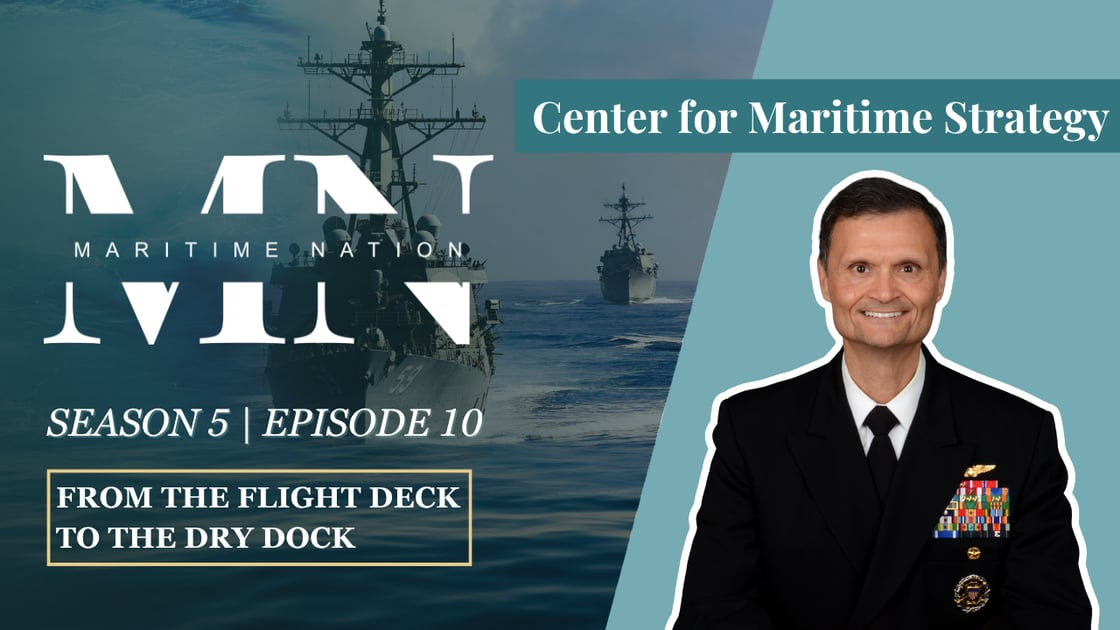
Rear Adm. Kavon "Hak" Hakimzadeh has flown E-2 Hawkeyes off carrier decks, commanded a carrier strike group, and racked up over 3,300 flight hours and 850 arrested landings. Now he's running Norfolk Naval Shipyard — the oldest and largest public shipyard in the country. ADM Foggo sits down with him to talk about the journey from flight deck to dry dock, the toughest lessons from five Pentagon tours, and what it takes to lead one of the Navy's most critical industrial commands.
→ Watch the episode on YouTube, or listen on Appleor Spotify.
INFORMING AMERICA'S MARITIME VOICE
Maritime Policy Statement ➜ Download Here
Center for Maritime Strategy Online Journal ➜ Read The MOC
Pier Review Report ➜ Download Report
2026 Seapower Almanac: Order a copy
Navy League of the United States, 2300 Wilson Blvd., Suite. 200, Arlington, VA 22201, United States
Professional Women’s Network Luncheon — Dr. Poki'i Balaz: Your Brain, Your Future
📅 Date: Thursday, October 22, 2026 | 11:30 am – 1:30 pm HST (RSVP by 12 PM, Oct 16, 2026)
📍 Location: Waikiki Yacht Club, 1599 Ala Moana Blvd, Honolulu, HI 96814
🎟 Tickets / Info: PWN members $50 / non-members $60 (online); late registration +$10 — register at PWNhawaii.org
📧 Contact: AlohaPWN@gmail.com
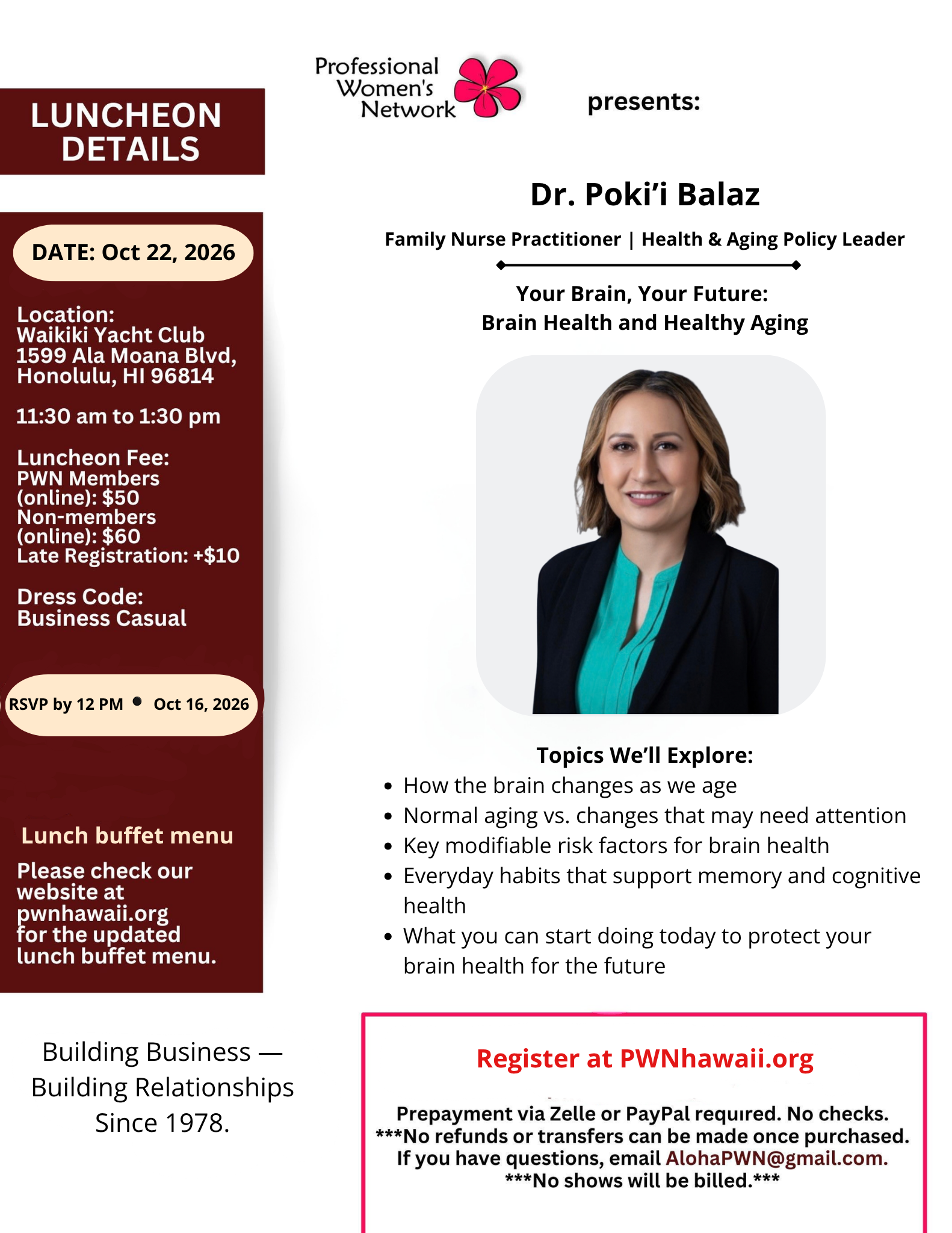
Professional Women's Network presents: Dr. Poki'i Balaz
Family Nurse Practitioner | Health & Aging Policy Leader
Your Brain, Your Future: Brain Health and Healthy Aging
Luncheon Details
- Date: Oct 22, 2026
- Location: Waikiki Yacht Club, 1599 Ala Moana Blvd, Honolulu, HI 96814
- 11:30 am to 1:30 pm
- Luncheon Fee: PWN Members (online): $50; Non-members (online): $60; Late Registration: +$10
- Dress Code: Business Casual
- RSVP by 12 PM • Oct 16, 2026
- Lunch buffet menu: Please check our website at pwnhawaii.org for the updated lunch buffet menu.
Topics We'll Explore:
- How the brain changes as we age
- Normal aging vs. changes that may need attention
- Key modifiable risk factors for brain health
- Everyday habits that support memory and cognitive health
- What you can start doing today to protect your brain health for the future
Building Business — Building Relationships Since 1978.
Register at PWNhawaii.org
Prepayment via Zelle or PayPal required. No checks. No refunds or transfers can be made once purchased. If you have questions, email AlohaPWN@gmail.com. No shows will be billed.
From My Practice — Your Year-End Financial Checklist

From My Practice®
October 2026

Your year-end financial checklist
Explore 10 year-end actions that could help boost retirement savings, lower taxes and support your financial goals.
Ways to save more for retirement
The months before the end of the year can be a good time to review your retirement contributions. Learn about opportunities that may help you save more toward your long-term goals.
Understanding tax-loss harvesting
Market declines can sometimes create planning opportunities. Learn how tax-loss harvesting works and why investors may choose to use it.
A complete view of your financial life
Ameriprise® OmniView™ brings your full financial life together in one secure, easy-to-use dashboard. Whether you’re reviewing connected accounts or adding new ones, OmniView helps keep your net worth view up to date and supports more informed conversations with your advisor.
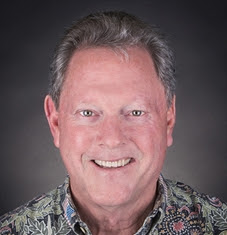
David Livingston
Financial Advisor
808.441.4000
Email me
Visit my website
Office Locations
Introduce me
Pre-Planning with Linda Rose Herman — “There Is Really No Reason to Drag Your Feet”
To some people, getting a Pre-Plan is “when you are no longer a sales target, but when it started feeling essential. Even then, I’ll admit, I dragged my feet.” Brittany Talarico, Style and Beauty Editor, People Magazine, Dec. 2024 – Present, previously Associate Editor of Cosmopolitan Magazine, 2011-2012.

Dragged your feet? For goodness sake, why? It isn’t difficult or time consuming (maybe an hour or two) if you work with the right person who has experience, knowledge, is friendly, and has a sense of humor. Linda Rose Herman is that person and tells us that now is the best time to arrange for your Pre-Plan. As costs rise, so do Pre-Plan costs. A Pre-Plan takes care of the inevitable. You can take care of this anytime in your life but it is best to do it now to improve your own well-being; enjoy peace of mind and give your family and loved ones a sense of security, relief and their peace of mind.
Why Linda Rose Herman? She has helped more than 10,000 Hawaii families get a Pre-Plan for what happens when you die. A Pre-Plan is like life insurance, fire and auto insurance, or health insurance. It protects your loved ones from a highly emotional event, from rising costs, and not knowing what to do in a distraught situation.
“l will be happy to help you with your and your family’s Pre-Plans for traditional/casket or cremation. You can make the decisions now as to where you will be buried, or whether your wishes are to be cremated and your ashes scattered, or whether you want a niche, a family plot, or have your own mausoleum, etc.
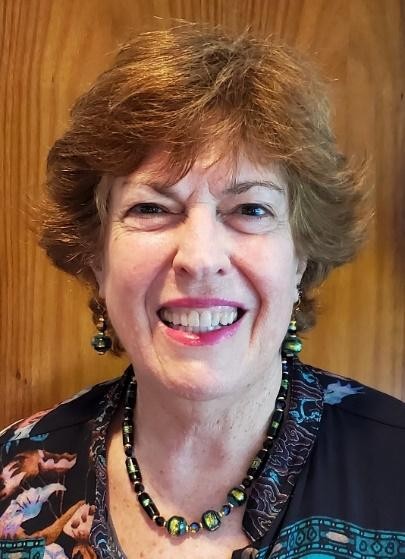
“A Preplan can also prevent some of your loved one’s personal suffering if you should die suddenly. It can prevent their stress from getting any worse, while trying to arrange your sudden funeral/burial.
“Just give me a call. I will help you with your and your family’s Pre-Plans and, at the same time, you can also add a lifetime travel plan for $599 in case you or your children should die while away from home. This life-time travel plan will bring your body back home—a procedure that can cost thousands of dollars and occurs more often than you may think. Please ask me about the Family-First Protection Plan to cover children and grandchildren until they are 21. Let’s talk and do this while you still can, and those who love you can rest easy knowing your choices will be honored. There is really no reason to drag your feet.”
Linda Rose Herman
Pre-planning Advisor
Hawaiian Memorial Park & Funeral Services/Borthwick Mortuary
(808) 864-3505

Check Out This Amazing Camp Site — Palolo Paradise Preserve
Check out this Amazing Camp Site
Mahalo for Celebrating 100 Years with Us! — Hawaiʻi Region Y Service Clubs
Mahalo for Celebrating 100 Years with Us!
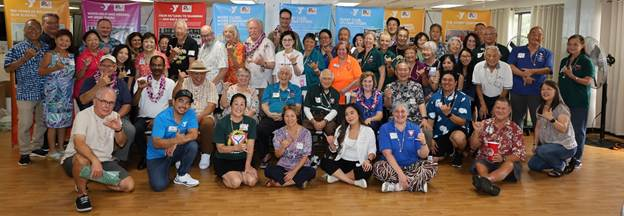
The Hawai‘i Region Y Service Clubs 100th Anniversary Celebration was a wonderful success, and we are grateful to everyone who helped make this milestone so special.
Mahalo for being part of this historic celebration. Whether you traveled from near or far, supported us through your generosity, helped behind the scenes, or simply joined us to celebrate, your presence and support meant so much to us.
This celebration was more than a look back at 100 years of history—it was a celebration of service, fellowship, friendship, and the people who continue to carry our mission forward.
We are truly grateful for the memories we created together and for everyone who helped make the celebration a success.
Mahalo nui loa for being part of our 100-year journey!
We invite you to visit our 100th Anniversary Celebration webpage to see photos, highlights, and memories from this special occasion: 100th Anniversary Webpage
With appreciation,
Bobby, Sharon, Joe-Ann, Donna, Nainoa, Melanie
The Hawai‘i Region Y Service Clubs
100th Anniversary Committee
Bobby Stivers-Apiki
Co-Regional Director, Hawaii Region
Past Area President (PAP), U.S.
Y's Men International/Y Service Clubs
EM: hoku67@live.com
Wounded Warrior Ohana at Hale Koa
Wounded Warrior Ohana at Hale Koa
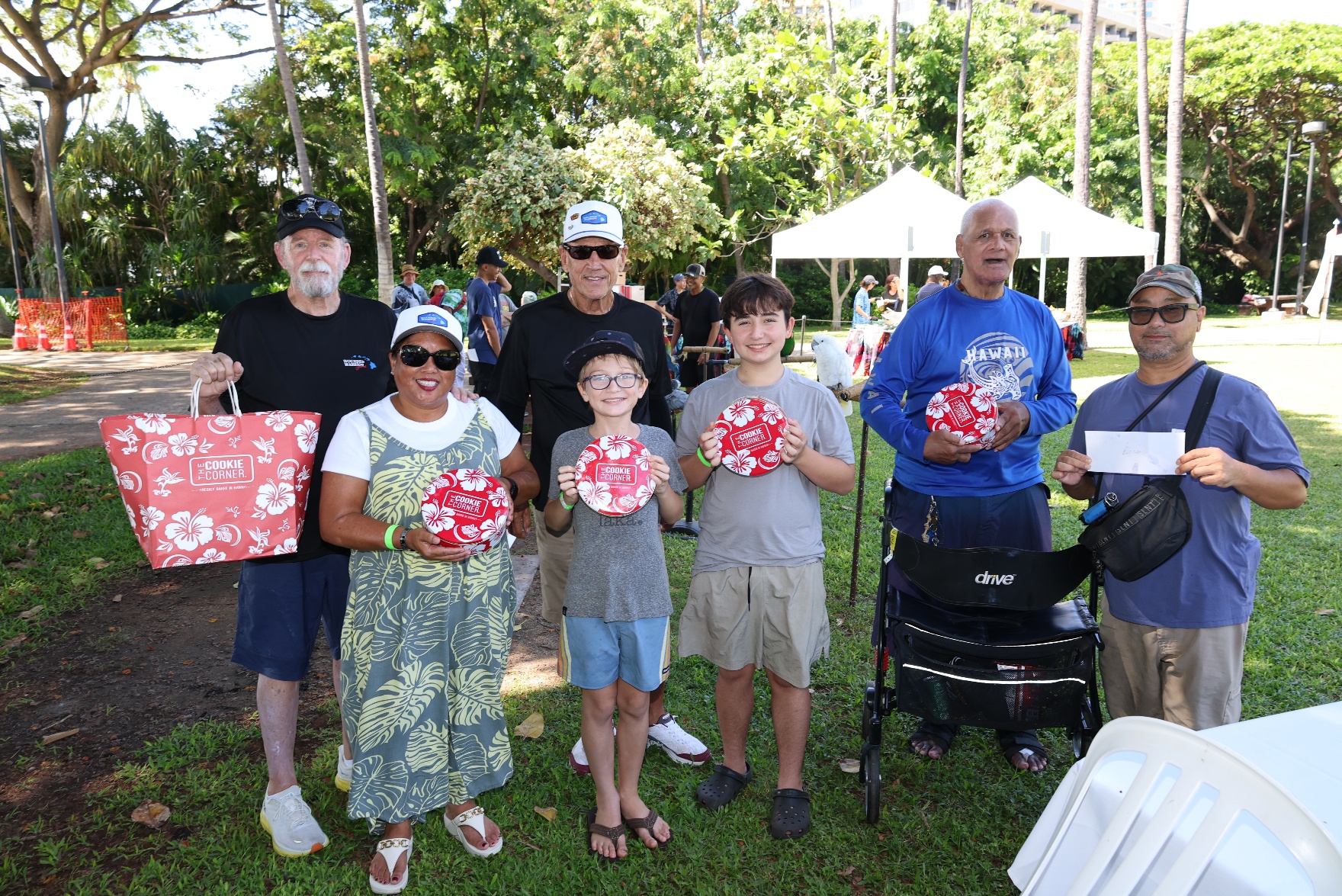
Enjoy the photos!
US Vets Golf Tournament
US Vets Golf Tournament
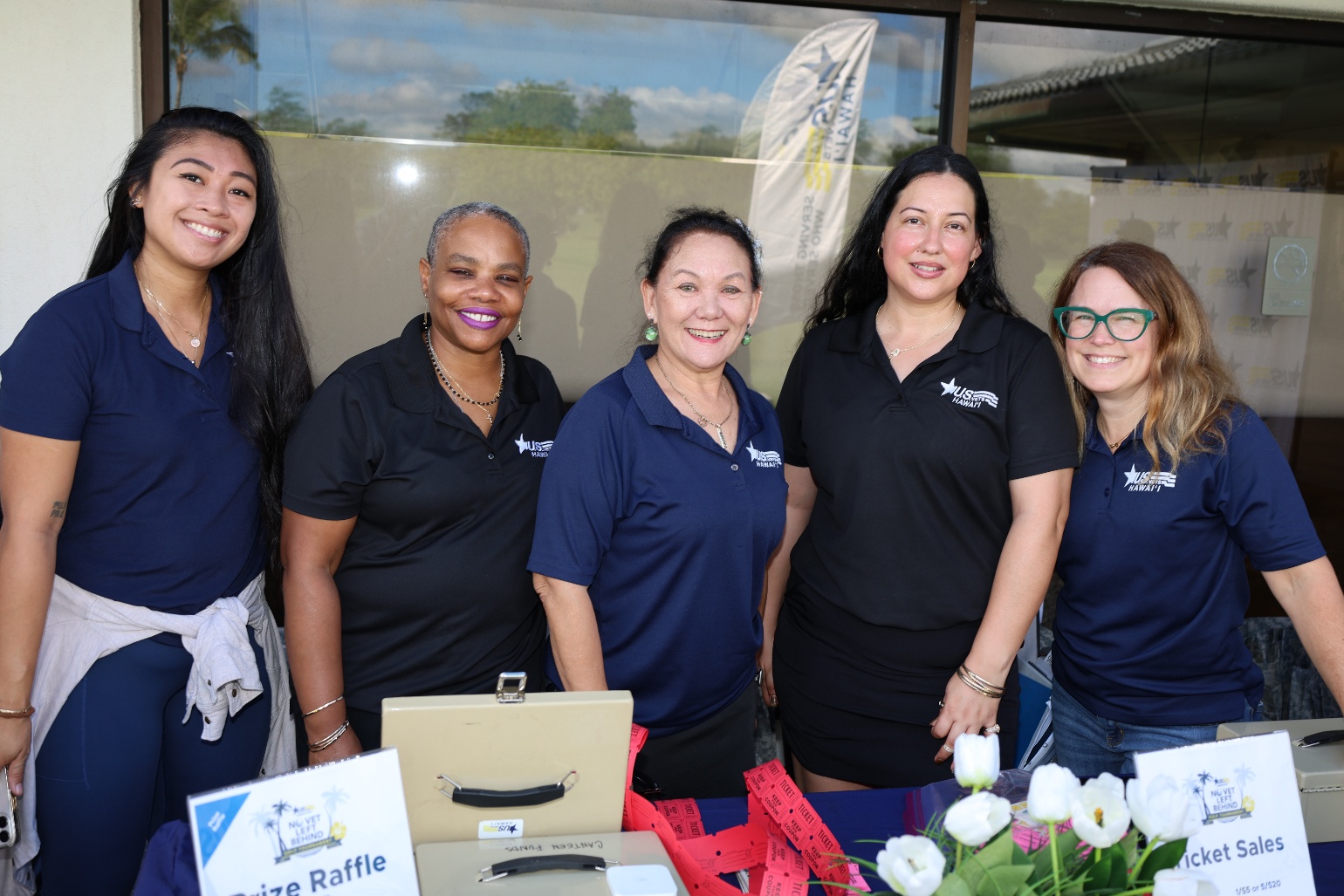
Enjoy the Photos
Pints for Polio
📅 Date: Saturday, October 24, 2026 | 3:00–5:00 p.m. HST (beer turns purple at 4:45 p.m.)
📍 Location: Off the Wall Craft Beer & Wine, Kakaʻako, Honolulu
🎟 Tickets / Info: $50 through September 30, $65 from October 1 (includes pupus and a $20 reloadable tap card) — see registration link below
📧 Contact: Nathan Graves — Nathan.w.graves@outlook.com
Pints for Polio
Please join us for Pints for Polio, a joint fundraiser hosted by the Rotary Clubs of Waikiki, Ala Moana, Downtown Honolulu, and Pearl Harbor!
Saturday, October 24, 2026 3:00–5:00 p.m. Off the Wall Craft Beer & Wine, Kakaʻako
Tickets are $50 through September 30 and include pupus and a $20 reloadable tap card. Beginning October 1, the price increases to $65, so please sign up early!
Sign up and pay here:
Pints for Polio Registration and Payment
After you’ve paid, please send me a quick message so Glenn Perry and I can keep track of our club’s headcount.
At 4:45 p.m., we’ll turn our beer purple as we come together in support of a polio-free world. Let’s have a strong Waikiki Rotary turnout for this fun and important event!
Please see the attached flyer for additional details.
Mahalo,
Nathan Graves
Rotary Club of Waikiki Foundation Co-Chair
Why Rotary – Two Great Reasons!
Why Rotary – two great reasons!
If you are interested in joining Rotary visit a few clubs to see what those clubs are about!
www.Rotaryd5000.org will get you a list of all the clubs in Hawaii
The Waikiki Club has a simple application
If you would like to visit the Waikiki Club call me – I would love to host you any Wednesday at noon at the Waikiki Yacht Club.
David C Livingston
Past President (Rotary Club of Waikiki) and current Assistant Governor
Rotary District 5000
World Polio Day 2026
📅 Date: Saturday, October 24, 2026 — World Polio Day (Strava movement challenge 24 September – 24 October)
📍 Location: Worldwide — Rotary club events
🎟 Tickets / Info: Register your club’s World Polio Day event via the link below
World Polio Day 2026
Register Your Club's Event

World Polio Day on 24 October is much more than a date on the calendar. It’s a vital time for Rotary and Rotaract clubs around the world to join our partners, supporters, and public health advocates to raise awareness and funds that will help us end polio for good.
We made a promise to the children of the world: No child should suffer the consequences of this vaccine-preventable disease. Here’s how you can help.
Raise awareness

Explore the range of polio resources in the Brand Center and start downloading and sharing today!
New and updated World Polio Day materials are being added through October.
Start planning your event

Wondering what your club can do to raise awareness and funds for PolioPlus this World Polio Day? Explore the guide to planning successful events.
Whether your activity is a club presentation on the importance of eradication or an End Polio Now display that lights up a local landmark, every action makes a difference in the fight against polio. Start planning today!
Share what you’re doing
Registering your club’s World Polio Day event or activity is crucial to help us raise awareness of what Rotary and Rotaract clubs are doing globally to support polio eradication.
By sharing your club’s events, you not only demonstrate the power of Rotary to do good in the world but also provide information that can tell a story and inspire Rotary members and others in the future.
Build momentum with Strava

As you plan your World Polio Day activities, one way for club members to get involved is to join this year’s Team End Polio Movement Challenge on the fitness app Strava.
From 24 September through 24 October (World Polio Day), participants in the challenge from across the world will be part of the goal to complete 60 million minutes of movement.
World Polio Day messages are sent to polio eradication advocates, including:
The RI Board of Directors and directors-elect
The Rotary Foundation Board of Trustees and incoming trustees
Past RI presidents
District governors, assistant governors, and governors-elect
Rotary and Rotaract club presidents
Regional leaders (RRFCs, RMCs, RPICs, E/MGAs, and End Polio Now coordinators)
District Rotary Foundation chairs
Members of the Communications Committee
End Polio Now newsletter subscribers
Members of the PolioPlus committees (the International PolioPlus Committee, End Polio Now: Countdown to History Campaign Committee, Polio Eradication Advocacy Task Forces, PolioPlus national advocacy advisers, national PolioPlus chairs, district PolioPlus subcommittee chairs)
© Rotary International
One Rotary Center, 1560 Sherman Ave., Evanston, IL 60201-3698, USA
Love Your Comments!
Love your comments!
Aloha Dave:
I was delighted to hear that the Rotary Club will honor you with the Richard Matti Award at its 20th Annual Extravaganza. What a well-deserved recognition of your many years of community service, leadership, and generous commitment to Hawai’i nei.
Dave, such a fitting tribute in recognition of your Contributions, honoring someone who consistently celebrates others. Mahalo for helping to make a difference in Hawai’i.
Through your work with Rotary, the Navy League, and Things Worth Saving, you bring people together and shine a light on the individuals and organizations making a difference in our islands. I especially appreciate how much time and care you devote to recognizing others' contributions. It is wonderful to see you receiving that same appreciation.
Congratulations, my friend, and mahalo for all you continue to do for our diverse island community. This honor is a fitting tribute to your lasting contributions and the aloha you share so freely. Bravo Zulu
With respect and admiration, Bill
William F. Anonsen
Principal
THE MARITIME GROUP, LLC
Honolulu, Hawai'i
Congratulations on celebrating 15 years with Ameriprise Financial.
Thank you for doing a great job and taking good care of us all these years.
Sincerely,
Katherine Ellwood
Thank you, David. This is a true community service. Please know that it is appreciated. - Barbara Treat (and Jerry Sumida)
Aloha Dave:
I wanted to take a moment to extend my sincere mahalos and appreciation for your many years of dedication in bringing together and sharing the "Things Worth Saving" newsletter with our diverse multi-island communities here in Hawai‘i nei.
Dave, through your thoughtful curation, you have consistently highlighted the people, events, and stories that truly matter across our islands. Your work has helped strengthen connections, celebrate service, and keep so many of us informed and engaged with the warm "Spirit of Aloha" that defines our community and is synonymous in Hawai'i. The reach and impact of this newsletter, now connecting over 22,000 readers, is a testament to your commitment and care.
What you have created goes well beyond a newsletter. It is a living reflection of our community, our values, and the many individuals and organizations who quietly make Hawai‘i a better place each day.
Mahalo nui loa, Dave, for your time, your passion, and your unwavering dedication to sharing “things worth saving” with all of us. Your efforts have made a meaningful and lasting difference.
Semper paratus
With fondest Aloha and appreciation, Bill
William F. Anonsen
Managing Partner/Principal
THE MARITIME GROUP, LLC
Honolulu, Hawai'i
David,
Happy Holidays.
Thank you for the recurring Things Worth saving.
For those of us who are former HI residents (courtesy USN) and now spend time in HI doing business a good portion of the year, your TWS keeps us cocktail conversational on all the things going on in HI.
Happy New year and hope to see you at NL SAS (if not sooner) in APR 2026.
R,
Neil Zerbe
Congratulations on receiving the highest Navy League national award, the Scroll of Honor.
You are an incredible asset to the community.
I'm glad to be your friend.
Sincerely,
Katherine Ellwood
Rotary isn't just about service -- it's also about people you meet along the way. If David's story inspires you to serve, connect, and grow with others, learn how to join Rotary today: https://rotaryd5000.org/page/interested-in-joining/
Video:
Janet Kelley Rotary District 5000 Public Image Chair
Hi David:
"Dave Livingston, received the highest Navy League national award, the Scroll of Honor."
Certainly, Well Deserved!!, My, Friend!!
Stan Grube
"Because of you, each opportunity is elevated with a positive impact on your community. Your volunteerism and dedication have made a real difference"
I share this Tribute!!
Stan Grube
Nice job Dave. Well written as usual.
These are such beautiful photos. Thank you so much for capturing the memories for all of us!
On June 5, 2025 our very own Jane Ferreira and photographer and board member Dave Livingston, received the highest Navy League national award, the Scroll of Honor, each for their contributions to the National and Local Councils over the last 20 years. Bravo Zulu Jane and Dave. The Honolulu Council also cleaned up in other awards again this year!!! Mike Stevens – CEO Navy League of the United States
You brighten every event with your presence, and the photos as well.
We enjoyed our brief chats throughout the before and after.
Thanks you for what you do for the community.
Mahalo!
-- David and Nora (Bramlett)
Thank you for all the work you do for our community with the Rotary Club.
Your kindness was appreciated at the Ceremonies on Saturday.
Would it be possible to get some photos of HFD from you?
I believe that a Google drive would be best.
Mahalo,
Aaron Jones
Captain – Honolulu Fire Department
Engine 18 First Platoon
Kailua Fire Station
211 Kuulei Road
Kailua HI, 96734
(808)723-7418
Hi David,
I just wanted to take a moment to say thank you so much again for your time in capturing the event last night! Your efforts contributed to making the night such a success. It was a pleasure seeing and chatting with you
Have a fabulous weekend!
Ruvi Sirmans | Manager, Programs and Events | Young Professionals Coordinator
Phone (808) 380-2432 | Email rsirmans@cochawaii.org | Website cochawaii.org
733 Bishop Street, Makai Tower Suite 1200, Honolulu, HI 96813
Proudly serving as Hawaii’s advocate for business for 175 years.
These are great, David!! Thank you so much for your continued support and especially for sharing your talents with Make-A-Wish Hawaii!
Much Aloha,
Trini
The best newsletter you have ever sent. I enjoyed it very much.
Kathryn Henski
Dave - Thank you. You've outdone yourself!
So many photos and all great. Love the arcade shots. And the one near the end with you and Kendra is a winner.
Mahalo for all you do. Great event. - Jean Dickinson
Aloha David, and mahalo nui for including the DVAC golf tournament in your newsletter. It is much appreciated!!
Mahalo,
Lisa
Lee
Director, Marketing & Communications
Public relations has started! I think you will enjoy this interview on HI Now (in the link below).
Here are the links to the segments on HI Now: https://www.hinowdaily.com/2025/04/02/clay-partnering-shapes-colleagues-into-collaborators/
Here is a Link to Download Segment
Would love to hear your thoughts and thank you for the support.
Jerry Clay
Clay Partnering, LLC- Founder
Good morning my dear friend!
Happy Volunteer’s Month!!!
I wanted to take this time to Thank YOU from the bottom of my heart for your amazing support, as an Outstanding Volunteer! Your hardworking commitment is admirable, and I am truly grateful.
Because of you, each opportunity is elevated with a positive impact on our community. Your volunteerism and dedication has made a real difference, and I couldn’t do it without you!
May today and everyday be filled with love and joy always!
With much love from the bottom of my heart,
Ellie
Aloha Dave,
Always great seeing you at March of Dimes! Thank you for always capturing the best moments of people coming together for a worthy cause!
Dana Low
NMLS 639234
Branch Manager
Mililani Branch
808-844-8701
Fabulous photos Dave!! It looks like RYLA Oahu 2025 was a blast!
Mahalo for sharing,
Jen Tanouye
You REALLY DO TAKE GREAT PHOTOS - For lots of these folks, it's probably the most recent good photo they have.
And you never get anyone with their mouth open or chewing or eyes closed... or you do a great job at editing them out.
I know it is appreciated, even when people don't say thank you.
Nancy
Mahalo for sharing.
Best wishes to you and your 'ohana!
Me ke aloha pumehana,
Senator Mike Gabbard
Chair, Agriculture and Environment Committee
Hawai’i State Capitol, Room 201
Honolulu, Hawai`i 96813
Ph: 808-586-6830
A‘ohe hana nui ke alu ‘ia. “No task is too big when done together by all.”
Richard Rankin <dickrankin@wwohana.org>
Sun, Jan 5, 2025 at 8:52 PM
Aloha !
Please click on the site below to see our Board of Director David Livingston's wonderful photos of our Wounded Warrior Ohana Christmas Gala!
Warm regards,
Dick
Happy Birthday and Merry Christmas, Dave from Tokyo.
Thanks always for the news from around …..always interesting and helpful for calendar planning for events to go to … or a recap and peak at events I missed and wished I had attended.
Nice wrap up on SME event and list of honorees. Nice update on Christmas in the islands. All good, always. Loved the Tesla joke!
Keep staying young my friend.
And Happy New Year to you!
MAHALO!
DAVE
Dave Erdman | Founder, CEO & President
808-469-4833| derdman@pacrimmarketing.com
Aloha and Mahalo Dave,
As always the photos are awesome, Mahalo for what you do. I'm glad you got to prove to your wife you were working.
Much Aloha
Warmest Regards,
Lis
Hi David,
Just sending you a note of aloha and thanking you for the many wonderful events, pictures, charities you have supported since we met back in 2007. Amazing!
Thank you for leading and setting a great example for everyone.
You truly are an "Artiste Extraordinare".
3 Cheers for you.!!!
Aloha
Carla von & Geoff Milford
Navy League event pals
Generations808 — Find Out What’s Happening in Hawaiʻi
Find out what’s happening in Hawaii
What Has Changed and What Business Leaders Should Do Next — Dr. Mary C. Kelly
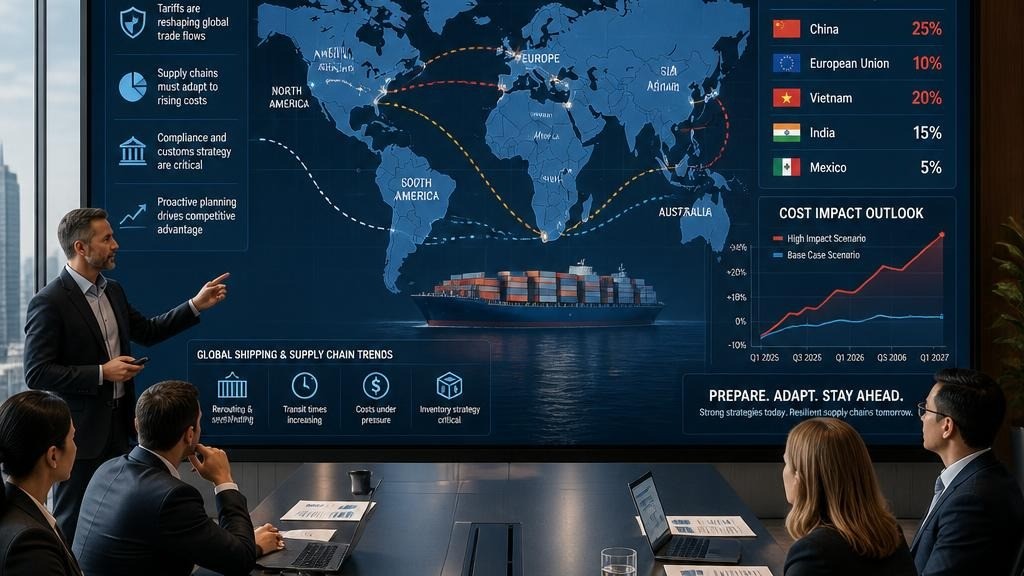
What has changed and what business leaders should do next

Mary Kelly, Commander, USN, CSP, CPAE
Keynote Speaker & Executive Advisor - Lead confidently through crisis, challenge, & change| Former Navy Intel Officer| Author, Leadership is Tough| Hall of Fame Speaker, Economist, Board member, Philanthropist, Podcaster
October 15, 2026
By Dr. Mary C. Kelly | September 27, 2026
Trade policy in 2026 has moved faster than most companies can revise a price list. A Supreme Court decision overturned the legal foundation for sweeping U.S. emergency tariffs in February. A temporary replacement then expired in July. Yet import duties did not disappear. The United States increasingly relied on other laws to target particular trade practices, countries, and strategic industries. For business leaders, the result is a complicated mix of tariffs, exemptions, negotiations, and retaliation that can affect a product at several points in its supply chain.
The central management question is no longer simply, “What is the tariff on imports from this country?” It is, “What is the total landed cost of this specific product, under the rules in force when it enters the country, and what happens if those rules change?” That distinction matters to purchasing, pricing, capital investment, and customer commitments.
The February ruling changed the legal landscape
In 2025, the Trump administration used the International Emergency Economic Powers Act, or IEEPA, for broad “reciprocal” tariffs and additional duties linked to drug trafficking. On February 20, 2026, the Supreme Court ruled that IEEPA did not authorize the president to impose tariffs. The decision concerned that particular legal authority. It did not eliminate the government’s ability to impose duties under other trade statutes. It also left a consequential practical question: how importers would recover duties collected under measures the Court had rejected. [1]
The administration responded with a 10 percent temporary import surcharge under Section 122 of the Trade Act of 1974, effective February 24. That provision allowed a surcharge for up to 150 days without an act of Congress extending it. The surcharge expired July 24. It was never a universal tax on every import: the proclamation excluded, among other things, qualifying goods from Canada and Mexico under the USMCA, certain energy and agricultural products, pharmaceuticals, some electronics, and goods or portions of goods subject to specified national-security measures. [2]
After July, the administration leaned more heavily on Section 301, which addresses certain unfair foreign practices, Section 232, which addresses imports found to threaten national security, and Section 338, which permits responses to discriminatory treatment of U.S. commerce. Each authority has different procedures and scopes. An announcement under one of them cannot safely be translated into a single tariff rate for an entire country. [3]
Trade negotiations did not stop
The first months of 2026 brought a series of bilateral arrangements or frameworks involving India, Indonesia, Bangladesh, Taiwan, Argentina, and other partners. In February, for example, the White House said its India framework would reduce a stated reciprocal tariff from 25 percent to 18 percent and remove an additional 25 percent duty connected to India’s purchases of Russian oil. The Supreme Court ruling soon changed the legal status of IEEPA-based duties, underscoring why an announced framework, a legal tariff authority, and the duty actually collected at the border must be checked separately. [3, 4]
The U.S.–China relationship also became more selective. At a May meeting in Beijing, the White House announced boards for trade and investment discussions, alongside Chinese commitments involving U.S. agricultural products, aircraft, and access to critical minerals. During President Xi’s September visit to the United States, the White House said the two sides had agreed on recommendations for more favorable tariff treatment for $30 billion of nonsensitive goods in each direction. Those recommendations cover categories such as American agricultural goods and medical devices and Chinese consumer products. They should be described as proposed favorable treatment, rather than an already implemented blanket reduction. Critical-mineral shipments and the fulfillment of purchase commitments remain measures of whether the relationship is genuinely stabilizing. [5, 6]
North America entered a difficult review
The United States, Mexico, and Canada held the required six-year review of the USMCA on July 1. The United States declined to renew the agreement in its current form. Crucially, USTR said the agreement remains in force while the parties continue discussions. Businesses should not confuse “not renewed” with “terminated.” Origin rules and preferential treatment still matter, even as the future terms are negotiated. [7]
Canada became a particularly visible source of friction. In July, USTR announced additional 50 percent Section 338 duties on specified Canadian imports, affecting nearly $20 billion of trade, in response to what it characterized as discriminatory treatment of U.S. vehicles, alcohol, and dairy. In September, the administration modified those actions and announced targeted import bans as Canada’s retaliation continued. These measures do not mean every Canadian product faces a 50 percent duty. They do mean that cross-border supply chains and U.S. exporters can be exposed to a dispute through very different channels. [8]
New tariffs targeted practices and industries
Section 301 became an important instrument after the court ruling. In March, USTR opened investigations into structural manufacturing overcapacity in 16 economies and separate investigations into the failure of 60 economies to prohibit imports made with forced labor. In July, USTR imposed duties arising from the forced-labor investigations, generally at 10 or 12.5 percent, with country-specific treatment and product exceptions. The overcapacity investigations should be discussed as investigations unless and until a specific final action is announced. [9]
Brazil was the subject of a distinct Section 301 action. In July, USTR imposed a 25 percent duty on certain Brazilian goods after examining issues that included digital trade, preferential tariffs, intellectual property, ethanol market access, and illegal deforestation. The scope is certain goods, not every import from Brazil. [10]
National-security measures under Section 232 added another layer. During 2026, the administration adjusted duties on steel, aluminum, and copper products and took actions concerning patented pharmaceuticals, drones, and polysilicon. The details differ sharply. Certain sensitive drones face a stated 100 percent duty, while other covered drones and components have lower rates or treatment tied to specified trading partners; some component duties have later start dates. The polysilicon action, announced in August, includes a minimum import price program and a 15 percent duty on specified downstream derivatives, with implementation scheduled for later in the year. [11]
The pharmaceutical proclamation is especially easy to oversimplify. It states a 100 percent rate for covered patented products but provides other rates for specified partners and companies with approved plans to move production to the United States. Certain company agreements and specialty products can receive zero-rate treatment, and generics are not subject to this Section 232 tariff at present. Some provisions began for listed companies in July; for other companies, the stated effective date is September 29. A headline about “100 percent drug tariffs” therefore does not describe what every medicine will face. [12]
What the economic numbers do and do not say
A tariff is paid to U.S. Customs by the importer. That does not settle who ultimately bears its cost. Suppliers may change prices, importers may accept lower margins, and customers may pay more. The split varies by product, competition, contracts, exchange rates, and how quickly a company can change suppliers. The cost of a tariff can also affect a U.S. manufacturer that buys imported inputs, even when the finished product is made domestically.
In its August 24 assessment, Yale’s Budget Lab estimated an average statutory U.S. tariff rate of about 11.0 percent after the Section 122 measure expired and Section 301 duties replaced part of it. It estimated an eventual overall consumer price impact of about 0.7 percent and an annual household cost of roughly $1,100 under then-current law. These are modeled impacts, not a claim that every retail price rose 11 percent or that every family has already paid that amount this year. [13]
Global trade has proved more resilient than the rhetoric sometimes suggests. The World Trade Organization reported that its September goods-trade barometer stood at 102.0, above the benchmark of 100, supported partly by demand for electronics associated with artificial intelligence. Its March forecast projected 1.9 percent growth in world merchandise trade volume for 2026 under its baseline scenario, or 1.4 percent if higher energy prices persisted. Trade can keep growing even as individual firms face significant disruption and uncertainty. [14]
Five decisions business leaders should make now
First, calculate exposure at the product level. Ask for the tariff classification, legally determined country of origin, applicable trade agreement treatment, entry date, and every potentially applicable additional duty. A supplier’s mailing address or an invoice’s country label is not a substitute for an origin analysis.
Second, stress-test pricing and contracts. Identify which agreements allow a price adjustment after a duty changes and which leave one party absorbing the cost. A quote that is profitable when issued can become unprofitable before goods clear customs.
Third, evaluate alternate sourcing on total landed cost. A lower quoted factory price may be overwhelmed by duties, freight, quality risk, inventory needs, or a longer lead time. Likewise, moving final assembly does not automatically change a product’s legal origin.
Fourth, watch export markets as closely as imports. Retaliation, market-access restrictions, and shifts in foreign purchasing can reduce sales for American producers even when their own imported inputs are unaffected.
Fifth, separate temporary measures, final actions, scheduled start dates, and negotiating statements in board and investment discussions. A factory decision lasts much longer than a news cycle. Leaders should know which policy assumptions are firm enough to support a capital commitment and which deserve a contingency plan.
The outlook for the rest of 2026
The next developments to watch are the implementation of scheduled product-specific measures, the U.S.–Canada dispute and USMCA talks, the results of Section 301 investigations, and whether the United States and China turn their September recommendations into operative tariff changes. No single headline rate will adequately describe the outcome. The companies best positioned to respond will be the ones that know precisely where their goods come from, what each shipment costs after customs, and how quickly they can adjust when a rule changes.
Sources
[1] U.S. Supreme Court, Learning Resources v. Trump, February 20, 2026. https://www.supremecourt.gov/opinions/25pdf/24-1287_4gcj.pdf
[2] White House, Temporary Import Surcharge proclamation, February 20, 2026. https://www.whitehouse.gov/presidential-actions/2026/02/imposing-a-temporary-import-surcharge-to-address-fundamental-international-payments-problems/
[3] USTR, Presidential Tariff Actions. https://ustr.gov/trade-topics/presidential-tariff-actions
[4] White House, U.S.–India trade deal fact sheet, February 9, 2026. https://www.whitehouse.gov/fact-sheets/2026/02/fact-sheet-the-united-states-and-india-announce-historic-trade-deal/
[5] White House, China deals fact sheet, May 17, 2026. https://www.whitehouse.gov/fact-sheets/2026/05/fact-sheet-president-donald-j-trump-secures-historic-deals-with-china-delivering-for-american-workers-farmers-and-industry/
[6] White House, China state visit fact sheet, September 25, 2026. https://www.whitehouse.gov/fact-sheets/2026/09/fact-sheet-president-donald-j-trump-advances-a-fair-and-reciprocal-relationship-with-china-while-hosting-historic-state-visit/
[7] USTR, Statement on the USMCA Joint Review, July 1, 2026. https://ustr.gov/about/policy-offices/press-office/press-releases/2026/july/ambassador-greer-issues-statement-usmca-joint-review
[8] USTR, Canada Section 338 statements, July 20, and September 8, 2026. https://ustr.gov/about/policy-offices/press-office/press-releases/2026/september/ambassador-greer-issues-statement-president-trumps-response-canadas-continued-retaliation-against
[9] USTR, Forced Labor Section 301 Action, July 23, 2026. https://ustr.gov/about/policy-offices/press-office/press-releases/2026/july/ustr-takes-action-forced-labor-section-301-investigations
[10] USTR, Brazil Section 301 Action, July 15, 2026. https://ustr.gov/about/policy-offices/press-office/press-releases/2026/july/ustr-section-301-action-brazils-unreasonable-acts-policies-and-practices
[11] White House, Drones and Polysilicon fact sheets, August 2026. https://www.whitehouse.gov/fact-sheets/2026/08/fact-sheet-president-donald-j-trump-bolsters-national-security-and-strengthens-u-s-supply-chains-by-imposing-tariffs-on-drones-and-their-parts-and-components/
[12] White House, Pharmaceuticals proclamation, April 2, 2026. https://www.whitehouse.gov/presidential-actions/2026/04/adjusting-imports-of-pharmaceuticals-and-pharmaceutical-ingredients-into-the-united-states/
[13] Yale Budget Lab, The State of U.S. Tariffs, August 24, 2026. https://budgetlab.yale.edu/research/state-us-tariffs
[14] WTO, Goods Trade Barometer, September 9, 2026. https://www.wto.org/english/news_e/news26_e/wtoi_09sep26_481_e.htm
Seapower Weekly — October 15, 2026

October 15, 2026

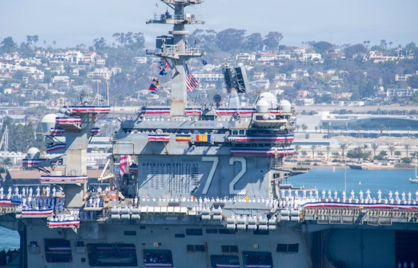
USS Abraham Lincoln Returns to San Diego After 10-Month Combat Deployment
Abraham Lincoln departed its homeport on Nov. 21, 2025. The 321 days since casting off lines from San Diego have taken the carrier and its crew across the Pacific Ocean, through the San Bernardino Strait, Surigao Strait, and Strait of Malacca, and into the South China Sea, Indian Ocean, and North Arabian Sea. Read more

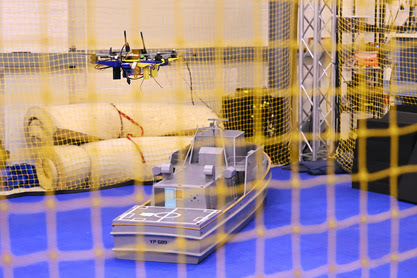
The Naval Air Warfare Center Aircraft Division successfully proved an unmanned system can navigate missions and land aboard Navy ships without GPS or pilot control. Read more
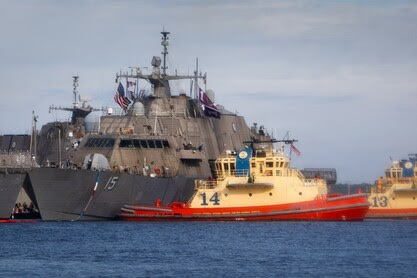
The Freedom-class littoral combat ship USS Billings (LCS 15) returned to Naval Station Mayport Oct. 10, 2026, following a 6-month deployment to U.S. Fourth Fleet area of operations in support of U.S. Southern Command’s mission. Read more
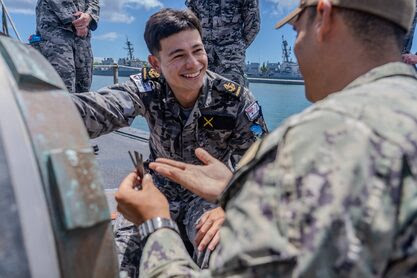
In the summer of 2025, in a corner of a machine shop at Pearl Harbor Naval Shipyard & Intermediate Maintenance Facility, Able Seaman Colby Morley disassembled a pressure valve for testing. It’s the kind of hands-on job he’d rarely get to do back home as an avionics technician with the Royal Australian Navy. Read more
Navy League of the United States, 2300 Wilson Blvd., Suite. 200, Arlington, VA 22201, United States
Rotary Club of Waikiki RYLA Presentation by Brian Dunkerly + RYLA 2027 Camp Registration
📅 Date: February 19–21, 2027 (2 nights, 3 days)
📍 Location: Camp Erdman, 69-385 Farrington Hwy, Waialua, HI 96791
🎟 Tickets / Info: Free for all Oʻahu high schoolers — 100% sponsored by Hawaii Rotary; registration links below
📧 Contact: Rick: 808-285-5936 | oahu@rylahawaii.org
Rotary Club of Waikiki RYLA Presentation by Brian Dunkerly
Enjoy the Photos
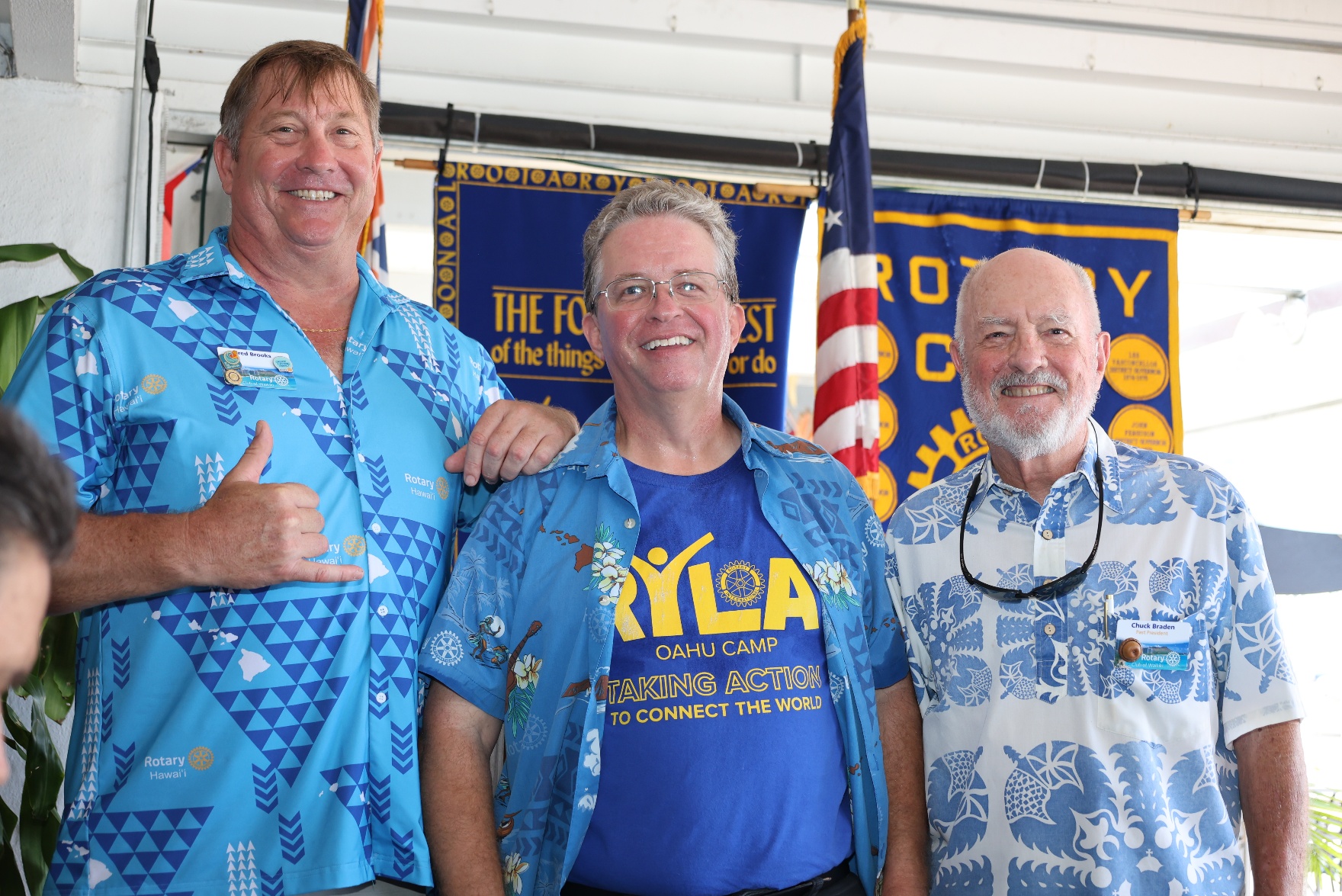
RYLA – Help sponsor a student to this camp!
David@DavidLivingstonHawaii.com
E-mail me today.


Hey everyone!
The wait is over. It is officially time to secure your spot for the Rotary Youth Leadership Awards (RYLA) Camp, happening from February 19–21, 2027!
Whether you are a high school student ready to unlock your leadership potential or a Rotary volunteer eager to mentor the next generation of changemakers—come one, come all!
Why attend RYLA 2027?
For Students: Connect with peers, build confidence, and develop lifelong leadership, teamwork, and problem-solving skills through high-energy activities.
For Volunteers: Inspire local youth, facilitate life-changing discussions, and give back to your community alongside fellow Rotarians.
Spaces fill up quickly every year, so do not wait to sign up.
Let’s make this the most impactful camp yet. See you in February!
Registration link for volunteers:
Registration link for participants:
Please Share This With Everyone You Know, to Help Spread The Word!
Mahalo Nui Loa,
-Rick Tabor, Oahu’s RYLA Chair
"Lead Today, Shape Tomorrow." Rotary Youth Leadership Awards at Camp Erdman — Feb 19-21, 2027. 100% sponsored by Hawaii Rotary. Free event for all Oahu High Schoolers. An annual program to help high school students develop their leadership skills through team building activities, experiential group work, & new friendships. Scan QR code to reserve your spot today — Registration Deadline: Jan. 20, 2026 [sic — as printed]. All RYLA campers are expected to spend the entire 2 nights, 3 days. No exceptions. Contact Rick: 808-285-5936. Email Questions: oahu@rylahawaii.org. 69-385 Farrington HWY, Waialua, HI 96791. Hawaii Rotary District 5000.
Shared by Richard Weylman — Where Do You Make the Greatest Impact?
Shared by Richard Weylman
Several years ago, I asked an individual I was coaching a couple of simple questions.
Given the state of many careers right now and the number of people I hear from who feel overwhelmed or unhappy in their current roles, the questions are just as relevant today.
I asked, “Where do you make the greatest impact in your business? What activities, if done consistently, would create the biggest results for you and your team?”
He answered almost immediately: “Doing demonstrations and recruiting more salespeople.”
Then I asked him, “Are you spending 80% of your time doing those things?”
His answer was, “No.”
I followed with another question and a statement: “Why? And you’re not allowed to say you have more important things to do.”
That moment hit him hard. It forced him to confront a simple truth: He already knew what created success but wasn’t consistently doing it. Once he focused on what brought the biggest results, his business grew more than 10X.
I mention this because many of us get caught up in being busy when we should be laser-focused on being productive—and investing in services like AI and people to handle the rest.
So, for you:
Where do you make the greatest impact in your business?
What activities, if done consistently, would create the biggest results for you and your team?
Are you spending 80% of your time doing those things?
If not, why not?
And you’re not allowed to say you have more important things to do.
In the spirit of achieving your real potential,
Richard
C. Richard Weylman
http://www.richardweylman.com
- Hall of Fame inducted Keynote Speaker
- Customer Experience Hall of Fame inductee
- Three-time International Best-Selling Author
- Chairman, Weylman Consulting and Coaching Group
Copyright © 2026 Richard Weylman Inc., All rights reserved.
You are receiving this email because of your association with Richard Weylman, Inc.
Our mailing address is:
Richard Weylman Inc.
P.O. Box 510970
Punta Gorda, FL 33951-0970
CMS Weekly — October 13, 2026: America’s Future Fleet
📅 Date: Thursday, November 19, 2026 | 8:00 a.m. – 2:30 p.m. ET
📍 Location: Navy League Building, Arlington, VA
🎟 Tickets / Info: See “RSVP Here” below
October 13, 2026
America’s Future Fleet
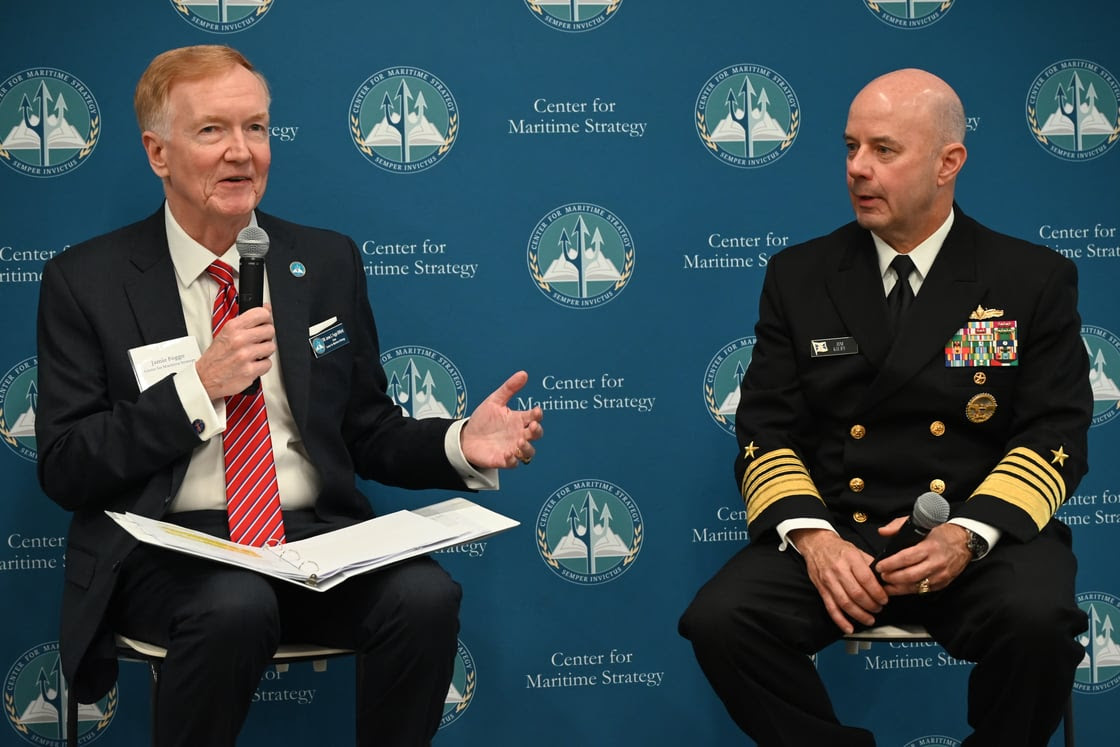
The Center for Maritime Strategy will host the fifth annual America’s Future Fleet: The Resurgence of Maritime Strategy on Thursday, November 19, from 8:00 a.m. to 2:30 p.m. at the Navy League Building in Arlington, VA. As great-power competition intensifies and demands on America’s naval forces grow, this year’s conference will bring together leaders from the think tank community, military, government, Congress and industry to examine the future of U.S. maritime strategy, from securing critical chokepoints to assessing the fleet America has—and the fleet it needs.
This Week in The MOC
The Illusion of the Fortress: How Shipbuilding Became the Beltway’s Most Controversial Foreign Policy Issue
Facing sharp questioning over Navy proposals to “explore foreign shipbuilding opportunities,” naval leadership was forced into a historic admission: the Pentagon explicitly intends to offshorere the initial construction of four auxiliary vessels.

America’s Logistics Blind Spot Runs Right Through the Middle of Nowhere
U.S. logistics strategy often focuses on ports, highways and rail while overlooking the resilience of inland waterways and water infrastructure. Revitalizing those corridors could provide another layer of capacity when traditional transportation networks are congested or disrupted.
Commentary & Featured Appearances
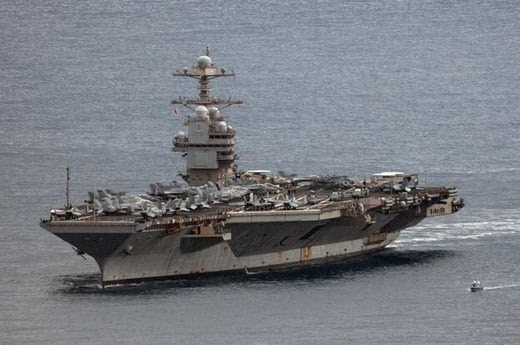
Dr. Steven Wills In Forbes
Maritime Nation Podcast
Rear Adm. Kavon "Hak" Hakimzadeh has flown E-2 Hawkeyes off carrier decks, commanded a carrier strike group, and racked up over 3,300 flight hours and 850 arrested landings. Now he's running Norfolk Naval Shipyard — the oldest and largest public shipyard in the country. ADM Foggo sits down with him to talk about the journey from flight deck to dry dock, the toughest lessons from five Pentagon tours, and what it takes to lead one of the Navy's most critical industrial commands.

Stay connected with the Center for Maritime Strategy
Read the latest analysis in The MOC, listen to the Maritime Nation podcast, and explore CMS reports, events and programs advancing the conversation on U.S. maritime power.
Explore more from CMS:
→ Pier Review Report: Leveraging the Allied Maritime Industrial Base
→ Upcoming Events | Subscribe to CMS Weekly | Media Inquires
Navy League of the United States, 2300 Wilson Blvd., Suite. 200, Arlington, VA 22201, United States
CMS Weekly — October 20, 2026: MCPON 13 Joins Maritime Nation
📅 Date: Thursday, November 19, 2026 | 8:00 a.m. – 2:30 p.m. ET (America’s Future Fleet)
📍 Location: Navy League Building, Arlington, VA
🎟 Tickets / Info: See “RSVP Here” below; Nimitz Internship applications due 11:59 p.m. ET, October 26
October 20, 2026
MCPON 13 Joins Maritime Nation
ADM James Foggo talks with MCPON Mike Stevens, the 13th Master Chief Petty Officer of the Navy and CEO of the Navy League, about his new book No Excuses: The Power of Hard Work and Discipline. From a tough start in Montana to the Navy’s top enlisted post, Stevens shares the lessons in faith, discipline, responsibility, service, and perseverance that shaped his journey, and why where you begin doesn’t determine where you can go.
This Week in The MOC
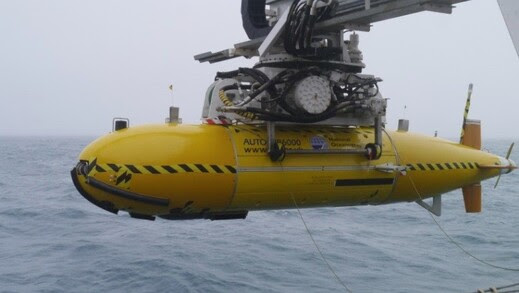
Underwater Drone Threats Are Already Here. America Isn’t Ready.
In December 2025, an explosion erupted beside a Russian Kilo-class submarine docked inside the heavily defended Novorossiysk Naval Base. Ukraine said one of its underwater drones had penetrated the harbor and struck the submarine, describing the operation as the first successful attack of its kind.
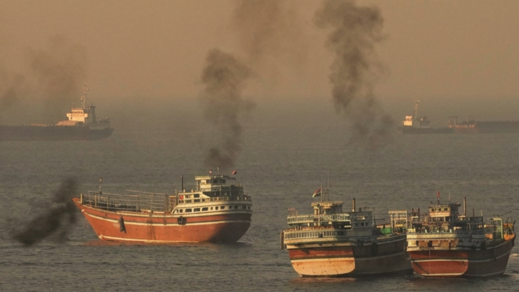
Washington’s Counter-Mine Wakeup Call
The still-contested Strait of Hormuz demonstrates that mine clearing under fire is a slow, risky process. The mission served as a litmus test for the Navy’s capabilities. While some systems proved effective, improvement and scaling are still required.
Commentary & Featured Appearances
Asan Security Quarterly
The Hill
Navy considers major aircraft carrier revamp to better suit Trump’s aesthetic
Applications Open for CMS’s Spring 2027 Nimitz Internship
The Center for Maritime Strategy is accepting applications for its Spring 2027 Nimitz Internship Program, due by 11:59 p.m. ET on October 26th. Interns gain hands-on exposure to think-tank work, from convening logistics to research writing, in a part-time, in-person role in Arlington, VA with a modest stipend.
America’s Future Fleet
The Center for Maritime Strategy will host the fifth annual America’s Future Fleet: The Resurgence of Maritime Strategy on Thursday, November 19, from 8:00 a.m. to 2:30 p.m. at the Navy League Building in Arlington, VA. As great-power competition intensifies and demands on America’s naval forces grow, this year’s conference will bring together leaders from the think tank community, military, government, Congress and industry to examine the future of U.S. maritime strategy, from securing critical chokepoints to assessing the fleet America has—and the fleet it needs.
Stay connected with the Center for Maritime Strategy
Read the latest analysis in The MOC, listen to the Maritime Nation podcast, and explore CMS reports, events and programs advancing the conversation on U.S. maritime power.
Explore more from CMS:
→ Leveraging the Allied Maritime Industrial Base
→ Subscribe to CMS Weekly | Media Inquires
Navy League of the United States, 2300 Wilson Blvd., Suite. 200, Arlington, VA 22201, United States
Rick Ralston Talk at Sales and Marketing Executives – An Amazing Story!
Rick Ralston Talk at Sales and Marketing Executives – An amazing story!
9/19/2026
SME
Dave Livingston, Maria Villa, and Janet Kelly,
Thank you, for organizing today’s event.
When Dave asked me to speak, my thought was, I've been retired a long time; I don't have anything new to offer. Dave said Just tell your story Today, I'm going to tell you the Crazy Shirt story, which is very much the story of the beginning of the imprinted T-shirt industry. It is the story of a company starting from scratch that grew to 65 stores grossing $90 million a year. It started when I sold the first shirt literally right off my back.
I will share with you some anecdotes about Waikiki in the 1960s and 70s. And some of the business concepts that worked for me. If you're still awake after all that, there will be time for questions and answers.
I grew up in Montebello on the east side of Los Angeles.
When I was young, I was poor. Now, after six decades of hard work, I can honestly say I'm no longer young.
I liked to draw. My mother encouraged my drawing; she was an artist herself. At the age of 18 in 1928, my mother was hired by a young man named Walt Disney. Mom was employee number 13. She was an inker and painter. Originally, Walt did the voices for both Mickey and Minnie. One day Walt walked into the studio, mom said hiya Mickey.
Walt said I want that voice. Mother was the first female voice for Minnie Mouse. I guess that makes me the son of Minnie Mouse.
When I was 17, I met an artist at my school who was known as the Crazy Arab. He said he knew how to airbrush paint sweatshirts like Big Daddy Roth does at the car shows. I begged Arab to show me how. That would require an airbrush and an air compressor. We had neither. We had little funds to buy such things, but where there's a will, there's a way. At the dump we found a rusty electric motor, compressor, and an air tank which we jury-rigged together. I plugged it in and blew a fuse. If I manually pushed the valves open until the flywheel built up momentum, then it would work. I said to Arab, " Let's go this summer to Avalon, Santa Catarina Island, and paint beach towels for the tourists. Arab was 17, I was 18. There was no business plan, no financing in place, no inventory. I was not even skilled in the use of an airbrush. In Avalon, we rented a 1- room cottage. Arab showed me how to paint with an airbrush. I practiced on my own white T-shirt. The landlady, hearing the air compressor running, came to inquire about the noise. Arab opened the door just a crack and explained we have tropical fish that need a flow of oxygen.
I had taken a job as a chef's helper in a breakfast restaurant. Walking back from work on the main street and wearing a shirt I had painted with a grotesque monster's face, I was stopped by a tourist asking where he could buy a shirt like that for his daughter.
This is it, I told him. Alright, will you sell it to me? He asked. I had no idea what to charge. I thought if I put a high price on it, maybe he'd bite on it. if he doesn't, nothing ventured, nothing gained. I mustered up all my courage and boldly said $5. I was pleasantly surprised when he didn't hesitate, opened his wallet, and handed me a $5.00 bill. I pulled the shirt off my back, handed it to him, and headed back to the cottage and told Arab: Forget the beach towels; we're going to paint T-shirts Arab and I rented a small outdoor space. We set up our easels and sat baking in the sun all day long, painting shirts. Our clientele were mostly teenagers. We had no inventory. Customers had to provide their own T-shirt or sweatshirt. If they had no white shirt, we sent them across the street where a fellow named Reyn McCullough had Reyn’s Menswear. Reyn would come to Hawaii in 1961 and open a shirt store selling Hawaiian shirts at the new Ala Moana Center. Sweatshirts were preferable to T-shirts for painting; the fabric being more absorbent allowed us to paint crisper lines.
We charged $2.85 to paint the customer's shirt. It took about 15 minutes to paint a grotesque monster face, Frankenstein in a hot rod, or anything the customer requested.
Business was good. People had never seen anything like this. It was new and exciting to watch the artist paint a shirt just for you. There was no competition. One day I grossed $100. I was jubilant. Dollar bills I'd stuffed in my pocket were falling out as I walked home. That was summer 1960. Summer 1961 was a repeat. One girl in our social group said: Why not come to Hawaii and paint shirts there. You can stay with my mom and me. Ever eager for something new, I was interested. My vision of Hawaii was grass shacks. I asked if there were hardware stores where I could buy paint.
My dad met me at the LA airport. He asked if I had enough money. Yes, Dad, I have 60 bucks. I'm all set. He gave me a $20 bill, which was a surprise, as he was not well off nor known as a generous person. What was I thinking, going on a one-way ticket to Hawaii with $60.00 in my pocket? How would I cover housing, food, and other expenses with just 60 bucks?
When someone asked me what brought me to Hawaii, I knew they meant why I came, but I told them what actually brought me was a DC6 4-engine propeller-driven plane painted pink. No, it wasn't a Mary Kay cosmetics plane; it was Pink Cloud Airlines. The airfare was $100 one way. It was not a direct flight. It stopped in Hilo for a change of planes.
I was so disappointed there was no hula girl to greet me with a lei.
The new plane had oil spewing out of 1 engine all the way from Hilo to Honolulu. At the airport, I could not find a taxi to get to Waikiki. There were no yellow cars with taxi on the roof. Finally, someone explained to me that those big black sedans were taxi cabs.
The fare to Waikiki was $3. The apartment on Cleghorn St. was $125.00 a month.
What was Waikiki like when I arrived in 1962?
There was one high-rise recently completed, the Foster Tower. It stood out like a sore thumb. It was a harbinger of things to come. The Foster Tower is now lost among all the bigger buildings.
Reyn’s Menswear had been open for a year. Jim Romig brought bolts of fabric back from Tahiti, had them sewn into garments, and built Hilo Hattie’s stores. Don Severson opened Tahiti Imports. Kimo McVay would bring a young entertainer named Don Ho to Duke Kahanamoku's restaurant in the IMP. Duke was 72 years old and was occasionally seen in the IMP.
What did tourists buy for souvenirs in 1962? Can you imagine that there were no printed T-shirts for sale? Aole. None, nowhere. T-shirts were white, and they were undergarments. Tourists could buy a monkey pod salad bowl, a hula doll, or a pennant, but not a T-shirt.
I don't recall why Arab did not come with me. Instead, my college roommate at Art Center School, Ed Newton, came. He picked up the use of an airbrush quickly.
The first shirts we painted were at the State Fair, which was held at Kapiolani Park. We bounced around at various Waikiki outdoor locations wherever we could rent a space.
We got a good spot right in front of the Seashell Bar at the Biltmore Hotel, the location of the current Hyatt. We paid rent to the bar manager, beach boy Bobby Kruzen. We were there for about a month before the owner found out and terminated the deal. We got a space in the Reef Hotel in the half basement right next to the beach. Someone complained that our young friends hanging around created an undesirable atmosphere.
So Roy Kelly threw us out. Ironically, some 30 years later, Roy Kelly's son, Doctor Richard Kelly, nominated me for salesperson of the year.
We had no inventory, as we had no money to buy inventory. We had no financing.
There were no Angel investors. We made a few dollars painting other people's shirts, then we went to Sears and bought some blank white T-shirts and sweatshirts off their shelves. It didn't take long before we had cleaned out all their stock. We then went to American Factors, Amfac, for Haines goods directly from the distributor. It wasn't long before we cleaned out Amfac's inventory.
Back then you could buy a shirt in any color you wanted, as long as it was white.
At the end of summer, Ed went back to art school in Los Angeles. I was too enthralled with beautiful Hawaii to return to gray, smoggy Los Angeles.
In 1962, after Labor Day weekend, there were few tourists in Waikiki. Many of the shops closed their doors until the holiday season. I would paint downtown on Hotel Street at night when an aircraft carrier was in town, and hundreds of sailors wandered Hotel Street.
Kalakaua was a two-way street. Picture this, if you can imagine, at 6:30 AM, I'm the only car on Kalakaua Ave. There are almost no pedestrians save for two men who stick out a thumb as I approach. I'm driving a 1930 Model A Ford roadster; it had set me back $50. One fellow hopped in the front seat, and the other climbed into the rumble seat. The guy in the front introduced himself: " Hi, I'm Lenny Bruce. Lenny Bruce was a stand-up comic known for his less-than-polite language. His friend was a teeter-totter...
They wanted a ride to the Foster Tower. I went with them to a breakfast party where Playboy bunnies in negligees served scrambled eggs. I was shy and uncomfortable and got out of there fast.
I wanted to get a space in the middle of Waikiki at the International Marketplace. The manager, Harry Newhart, turned me down, saying that painted T-shirts were just a passing fad. Fortunately, his assistant Eloise Wickersham saw the potential and told Harry to give me a space. Harry said I have no shops available. I said You have a shack in the back that has nothing in it but the caretaker's garden tools. You don't want that shop, Harry said. Yes, I do, and I eventually got it I was busy hand-painting shirts 10 hours a day, seven days a week.
My roommate, Drake Thomas, said I should go to the Labor Day weekend Lahaina Whaling Spree Festival in Maui, where I could sell a lot of shirts. I said I'm painting all the time; there's no time to paint anymore. Drake said “Make some shirts up in advance”. I have no time to paint more shirts. Have some screen printed, he said.
What's screen printing? Drake explained that I would give my artwork to a screen printer, who would in turn make multiple shirts with that design. Drake provided the image concept while I sketched a sailor wearing a striped shirt with a keg of beer under one arm and a whale over his shoulder. I took the artwork and six dozen white T-shirts to Kenneth Omuri at Island Handblockers. They printed fabric on long tables. They laid out the T-shirts and printed my design in black on white. Show art Drake worked on the Barkentine California, a square-rigged ship that took dinner cruises out of Kewalo Basin. He arranged to sail the ship to Lahaina for the weekend and for me to crew as a cook. Pretty funny 'cause I didn't know how to boil water.
Crossing the Kaiwi Channel, we sighted a large catamaran de-masted and bouncing about in heavy seas with a lot of very seasick passengers. We took the catamaran in tow into Lahaina where we received a hero's welcome for the rescue. Drake had a gig playing the guitar and singing at the Whale’s Tail bar on Front St. I got in and had free beers as his assistant. My salesgirl was working as a barmaid. She'd carry a tray of beers to a table with one arm and my T-shirts on her other arm and ask customers to help her brother earn his way through college by buying one of his shirts. The shirts sold out quickly. They were the first-ever screen-printed souvenir shirts to be sold in Hawaii.
Back at the International Marketplace, I continued to hand-paint shirts and added a few screen-printed shirts. My thought was that customers would always want an original hand-painted shirt. But all the customers really wanted was a souvenir shirt and preferred to not have to wait for one to be painted. I could hand-paint a shirt in about 15 minutes. I could screen print one in about 15 seconds. It didn't take a genius to see where the potential was. I decided to hang up the airbrush. I cleaned it carefully, wrapped it in a clean rag, and tucked it away. Six months later, a dear friend and a beautiful young lady, Pam Elsner, said, " Ricky, won't you please paint a shirt for my daddy's birthday. I capitulated. OK, Pam, for you I will do it. After painting that shirt, I gave the dirty airbrush a toss, never to be seen again.
My wife and I printed shirts at home. We took the coffee table to the carport and used it for the printing table. We printed 3 dozen shirts, hung them on the clothesline to dry, and went off to the beach. When we returned home, the Dalmatian had pulled several shirts off the line and trampled them in the mud. The rest we sold.
As demand grew, I contracted the printing out. Mr. Otani did business in a wood-frame building on Beretania St. where he printed bowling team shirts. He would sit at his desk, a bourbon and water glass always nearby, and hand-cut the stencils for screen printing. I'd give him three dozen T-shirts, which he'd print and return in about 3 days. If I gave him a gross of shirts to print, it was too much for him; I had to set up my own shop. Those days, there were no machines for printing T-shirts.
I made my own jig, even a jig for registering multiple-color prints.
I was a lucky guy to be in the right place at the right time. 1973, Lloyd Shearer came to our shop in the International Marketplace. Lloyd was the editor for Parade magazine, the Sunday supplement in almost every newspaper in the nation. Lloyd put us on the cover. It featured three of our salesgirls holding up T-shirts with slogans like " Fly the friendly skies of Cambodia”. The headline was How to Make a Fortune Selling T- shirts. Wow, national exposure. That’s advertising you couldn’t pay for! And it didn't cost a penny. It was great for business and also for kicking off the explosion of the printed T-shirt industry.
Sales were great. One of the key factors in our success was innovation, our ability to frequently bring out new designs, new prints to the market. Being the firstest with the mostest. We were a vertical operation. That is, we created, produced, and sold our products at retail. That gave us both the wholesale margin and the retail margin and the speed to get new products to the market quickly. It gave us the flexibility to adjust production and inventory rapidly to meet customer demand. Unlike most retailers, we did not have to buy several months' worth of inventory and be stuck with slow sellers and quickly run out of hot-selling items.
As we added more stores, we needed more production. After many years in a tin warehouse on Nimitz Highway, we built a new wooden facility in Halawa Valley. With mainland sales growing rapidly, my executives talked me into opening an additional production plant in Irvine, CA, that would save us $3,000,000 a year. It didn't save anything. It separated our Crazy Shirts team, our family, into two.
I wanted our people from CA to be together with us in one larger facility in Hawaii. I bought 6 acres in Halawa Valley just up the street from our factory.
Here's a painful lesson I learned. The lease premium on the industrial property cost $6 million. But before we started to build, the city took the property by eminent domain.
When they do so, who gets the money for the value of the property? The fee owner does. The lessee gets zero. Aole, nothing. So that was $6 million down the drain What is the likelihood of getting hit by eminent domain? Maybe the percentage chances are similar to getting hit by lightning. I got hit three times by eminent domain. The city took our company recreation beach house that we had on Chun's Reef. We did not want to lose the prime location, but we had the fee, and we got paid.
The Aiea sugar mill, after 100 years of operation, was closed and up for sale.
Restoring the old building, saving the antique machinery, and having a lot of room for offices, production, and a retail outlet was an exciting concept. I asked the Bank of Hawaii if the $16,000,000 listed price for the 16 acres was fair and if they would finance it, which they did. A couple of years later, under Mayor Jeremy Harris and with a push from Councilman Mufi Hanneman, eminent domain hit again. The city was going to take the property to satisfy some people who wanted the 16 acres of industrial property to be used for a community center and library.
The City would pay $6,000,000 for it. I asked the bank why the city says the property value is $6,000,000 when you said it was worth $16,000,000. What's the deal? Well, Mr.
Ralston, we really didn't do an appraisal. You wanted the property, and we wanted to make the loan. You owe the bank on that loan and the loan on the other 6 acres, so we're going to take your business from you. There you have it: the rise and fall of Crazy Shirts. I started with nothing, and I still have most of it left.
anecdote
So, what happened to the Crazy Arab, my original partner? He came to visit me in Hawaii a couple of times. He airbrushed painted a few shirts at one of our stores. He was an artist, just not a worker. On one of his visits, he came to my home in Mano a, bringing his friend Steven Stills, the Steven Stills of Buffalo Springfield, Crosby, Stills, and Nash. At that time. I didn't pay much attention to music; I had no idea who Steven Stills was. I had some friends who were folk singers, always struggling to find their next gig. I said, " Hi, Steven, nice to meet you. What do you do? I play the guitar. I said: Can you make a living doing that? Steven said I get by. Steven should have asked me if I could make a living selling T-shirts I was an artist. I had no business training. To run an ever-enlarging business, I had to learn to delegate. This can be tough because we all have that feeling that no one else can do the job as well as we can. The truth is, others can actually do the job better if given the opportunity, direction, training, and support.
One of the things I couldn’t bring myself to delegate was the selection of models for our catalog photography. Pouring over a stack of head sheets of beautiful young models was a task I had to do myself. I did let the female staff select the male models.
Our photographer, the late Jim Pate, would come from CA 1/4ly to shoot the catalog.
One day in my office, Jim said he had a model to recommend from CA. She was trying to break into the movies, but in the meantime, she was available at standard model rates. She was photogenic and had a great personality. I looked at her head sheet. I said to Jim, she’s pale and thin. Our image is for athletic, suntanned, outdoor-looking models. So, I passed on Cameron Diaz. We could have had Cameron Diaz as our cover girl Lessons:
Secrets to success in business.
A young MBA student whose assignment was to interview successful businesspeople sat in the office with the CEO of a large and successful company and asked, " Can you share with me any secrets for business success. Well, son, I can sum that up in 2 words: good decisions. Thank you, sir. Can you tell me how one learns to make good decisions? Well, son, I can sum that up for you in 2 words: bad decisions.
Lord knows, along with making a few good decisions, I've made some lulus of bad decisions. It is good to learn from others, so maybe you can make similar good decisions and avoid bad decisions.
We opened at Ala Moana shopping center. Business was super. I wanted to do more shopping centers. The only centers that had spaces available were mainland, out-of- the-way locations. Big mistake: I had to realize we're in the souvenir T-shirt business.
We needed to be in tourist locations.
A good decision was to buy the store space at the front of the International Marketplace. We were doing quite well, buried halfway in the back of the marketplace on a side corridor. I just knew we'd do so much better at the front. After all, what are the 3 most important factors in real estate? I'll give you a clue: number one starts with an L; shout it out if you know. #2 starts with an L, and #3?
If you wanted a space to sell to tourists in Hawaii, what could be better than front and center in the International Marketplace?
The jewelry store operator who had the front store space said he was ready to sell. We met for coffee. He wanted an $800,000 premium. That was a lot of money in 1973, but I was ready to jump on it. I was excited but tried not to show it. I said I'd think about it. My plan was to negotiate the price down significantly. He said I want$ 800,000 and not one penny less. I figured I'd start low; hopefully we could meet somewhere in between. I told his realtor I would pay $500,000. That evening at home, I got a call. Is this Rick Ralston? Yes. Did you just offer me a half million dollars for my store space? Yes. Well, you can go stuff yourself, he said. Actually, he used a word less polite than stuff. And hung up. OK, I thought I wasn't offended. He has his way of negotiating, and I have mine. We finally settled halfway in between at $ 650,000.
Did that investment pay off? Oh my yes it did. At our peak, we're grossing $1,000,000 a month out of that little space.
Negotiating I will share with you what I found works in negotiating a price. Whether it be a $5,000,000 business deal or a $100 table on Facebook Marketplace.
Always be courteous and respectful. Don't belittle what the other person is selling.
Do not ask “what is your best price?” If I'm the seller, I'm not going to tell you my best price or my lowest price or my bottom price, so don't ask. The jewelry store owner told me his best bottom price was $800,000 and not a penny less. It didn't matter. I negotiated him down by $150,000. Don't say “would you take X amount” to the seller.
That sounds like you're just testing the waters; you're fishing. If somebody asked me:
would you take so much, I would say, are you just curious or do you wish to make an offer?
What you can say is: what do you need to get? Chances are the seller has padded the asking price above what he really expects to get.
You can ask: “Are you open to offers?” Likely the answer will be yes, and you can say:” I would be interested at X amount of money”. Then there may be some back-and-forth action, and finally you meet at a price that's acceptable to the seller and the buyer.
When buying real estate, the brokers do not want the buyer dealing directly with the seller. That’s unfortunate, as the broker may not be a good negotiator. I had deals stalemated until I convinced my broker to allow a face-to-face meeting with the seller. I then closed the deal. The broker got the commission that otherwise she would not have.
One of my big mistakes was opening the Bugatti boutique in Waikiki. I knew selling T- shirts. I did not know how to sell luxury goods. In the 1990s, the Japanese were spending money like crazy on luxury goods when the yen to dollar exchange rate was in their favor. How nice would it be to have some of that business.
In the mid 90s, the Bugatti marque was resurrected from the fastest race cars in the early 20th century. They brought out the new Bugatti EB110 super sports car. They created a line of luxury goods, handbags, clothing, etc., which, in my opinion, was equal to or superior in style to Louis Vuitton or anything else on the market. We were awarded the Bugatti franchise for Hawaii. Being a car enthusiast, this was exciting for me. We built out a glitzy interior new store space where Prada is now at Lewers and Kalakaua. The store was filled with Bugatti memorabilia. There was a 1937 Bugatti Ventoux on the sales floor. The staff was well trained in customer service.
The store bombed Why did we not kick Louis Vuitton's okole? Here's the mistake I made. The $1,000,000 lesson that I will share with you. I learned the hard way that the Japanese don't buy fashion; they buy prestige. Louis Vuitton had been known for 100 years or more. Bugatti was new, unknown. There was no prestige in a $1500 Bugatti handbag.
What can I share with you in tips on marketing? Here's my philosophy- what works for me. It worked in my business and my personal life. Here you go: find out what they like, how they like it, and let him have it just that way. I will give you a good example.
Rob Thibeau created a successful chain of restaurants starting with Kimo’s in Lahaina, Leilani’s at Kaanapali, Keoki’s at Poipu, and Duke's on the beach at Waikiki.
Rob called me to look at the empty restaurant space he had just taken over at what was to be the Duke's location. I don't know the name of the restaurant, but it had been a high-end place with glistening woodwork and a big glass walk-in wine closet. It might have been a $500,000 interior. But since the restaurant was no longer operating, I presume it was unsuccessful. Rob said Rick, I'm ripping all of this out. Visitors can get a fancy restaurant at home. When they come to Hawaii, they want a Hawaii experience.
I'm going to give them Surf Beach Shack. Rob knew what customers wanted, and he was gonna give it to them just the way they wanted it.
One little mistake I made was not accepting Rob's offer for me to be his partner when he came here to the islands and got the restaurant space on Front St. in Lahaina for Kimo’s.
I liked the idea, but my board of directors cautioned me that 80% of new restaurants go belly up within three years.
A beach shack restaurant worked very well for Rob. An upscale, attractive yet somewhat casual restaurant worked for me in Lahaina. I wanted to buy and restore the Pioneer Inn in the center of Lahaina, but it was not for sale. A smaller version, the Lahainaluna Hotel building which for sale on Lahainaluna Rd., just off Front St. We renovated a dozen rooms upstairs, furnishing each in an authentic turn-of-the-century way with antique furniture and making it what one travel magazine rated it as one of the 12 most romantic inns in the nation. Downstairs, working with talented chef David Paul Johnson, we opened the Lahaina Grill. The food was excellent, the ambiance was attractive, and the staff was well trained in customer service. The restaurant always had the rating for Maui's best restaurant, and in November of 22 of 2022, TripAdvisor rated it the number one restaurant in the nation for customer experience.
I want to introduce you to a very special person and give a big thank you to the most wonderful woman for her love and support and for making every day of my life a joy for the past 15 years. Miss Sue Jansen, would you stand, please Show examples You have been a great audience; thank you for listening to this old man ramble on.
If you have questions, I may have some answers Misc.
One of the keys to employee motivation is having a clear mission statement. Our mission statement was simply called the three Ps: pride, people, profit in that order.
1: Take pride in the work you are doing, the service you offer, and the products you create.
2: People. Care for the people. Treat everyone equally, as team members, from the janitor to the CEO. Share information about finances, goals, successes, and failures.
3: Profit is a byproduct of doing number 1 and 2 correctly.
Our profit-sharing program had 20% of company profits going to the employees. This was a great motivator and team builder. It helped to hire and retain good employees.
Hiring great people. Where do you find, and how do you attract great employees?
When you have a vacancy and you need to find someone to fill that vacancy urgently, it can be a challenge to locate the right person and be able to afford the salary they would demand. Here is a lesson I learned I will share with you. The story is fictional but you'll get the idea. I was at SeaWorld watching whales jump out of the pool and over a pole that the trainer held up. I got the trainer aside and asked him Where do you find whales that will jump over a pole on command? I will tell you: we take a boat out in the ocean, we hold up a pole, and when a whale comes and jumps over it, we hire him. OK, I'll tell you what we really do. We take any ordinary whale with reasonable potential. When in the pool, he just happens to swim over a pole lying on the bottom of the pool, we throw him a fish. After a while, he gets the connection that swimming past that pole, he's going to get a fish. We keep raising the pole higher and higher, and he keeps going over the pole for a fish.
I'll give you a true example. What do you think you would have to pay to hire an executive chef for the nation's number one restaurant? In our case with the Lahaina Grill, our executive chef was hired originally as a dishwasher at $12.00 an hour.
A big mistake I made was not hanging on to the homes I purchased and sold.
Hindsight is 2020 vision. I'd restored about a dozen old homes just because I was saddened to see big, beautiful old homes razed and small cracker boxes come up in their place. I enjoyed the process of buying a dilapidated place and bringing it back to its former glory with the expectation it would be around for another century. My mistake was not hanging on to any of these homes for the long-term appreciation and rental income. At the time, the Crazy Shirt business was so successful I was unconcerned about investing in real estate. My first home in 1965 was a 1915 classic large home, moss rock foundation with a maid's quarters downstairs; the cost was $37,000. I had the down payment but could not get financing. The banker said, " Oh, Mr. Ralston, let's see you paint monsters on T-shirts for a living. I'm sorry, but we can't give you a loan. That $37,000 household a couple of years ago sold for 2.3 million.
The Greystone mansion in Makiki sold recently for close to $4 million I sold it in 1987 for $800,000.
Of all the lessons I've learned from the good and bad decisions made, here's the most important thing: health. You can be like Steve Jobs with huge business success, but if you have heart disease, cancer, or any life-threatening illness, business success is not going to save your life.
I was speaking to a group about health. To set the premise, I asked, if you don't have good health, what do you have? A fellow in the front row said Bad health? He was right.
I'm 85 years old; most of my friends my age are gone. In my opinion, it was their diet that killed them. On the other hand, take a look at Rick Fried, a world champion tennis player at 85 years old. He's on a healthy diet. 80% of disease is preventable with the right diet. The right diet we'll also help with global warming. My awakening came from the book Diet for a New America by author John Robbins. Robbins was the heir to the Baskin-Robbins ice cream fortune, which he renounced. John's son, Ocean Robbins, now carries the torch for a healthy lifestyle. His weekly e-mail newsletter is free. His books are cheap. It’s life-saving information. Connect online with Ocean Robbins. Save yourself and your family from common life-threatening diseases and help heal the planet. You cannot do business well from a hospital bed or buried under the ground.
When people ask me how I get my protein in a plant-based diet, I say same place that a 400-pound gorilla gets his. I cut out the middleman, the cow, and go direct to the source.
Anecdote:
When I was getting the lease at the front of the International Marketplace, it was owned by the Truesdale Corporation, except for that one front space, which was a separate lease held by Harold Schnack. I had to get approval from Harold Schnack to take over the space. When I was in his office and talking with him, it would take a long time for him to respond. Harry Newhart said, " Yes, that's Harold Schnack. Harry said once he decided he would lay his proposal out to Harold and then wait silently to see how long it took him to respond. 12 minutes went by, and Harold Schnack finally said, " Well, Harry, I'm going to need some time to think about that.
Things Worth Saving — by David C. Livingston


Share, Subscribe, and Contribute to Things Worth Saving
More than 22,000 people have signed up for Things Worth Saving, many of whom discover it through friends and colleagues. If you know someone who would enjoy Hawaiʻi-focused events, service opportunities, and thoughtful commentary, please encourage them to subscribe. Contributors are always welcome — community events, business news, service projects, and stories that uplift are especially appreciated. Articles received after Thursday evening typically appear in the following issue, unless time-sensitive.
Subscribe or share the newsletter with friendsHow to Submit Your Story or Event
If you have something to share in Things Worth Saving — an event, service opportunity, business highlight, or good news — please send your text by Thursday evening. Word files can be copied into the newsletter; JPEG images are welcome (no PDFs). Broadcasts begin late Thursday night. You can also use the unsubscribe link in the email version if you ever need to step away, and there's an easy form to add new readers.
Get details on submitting content to Things Worth Saving